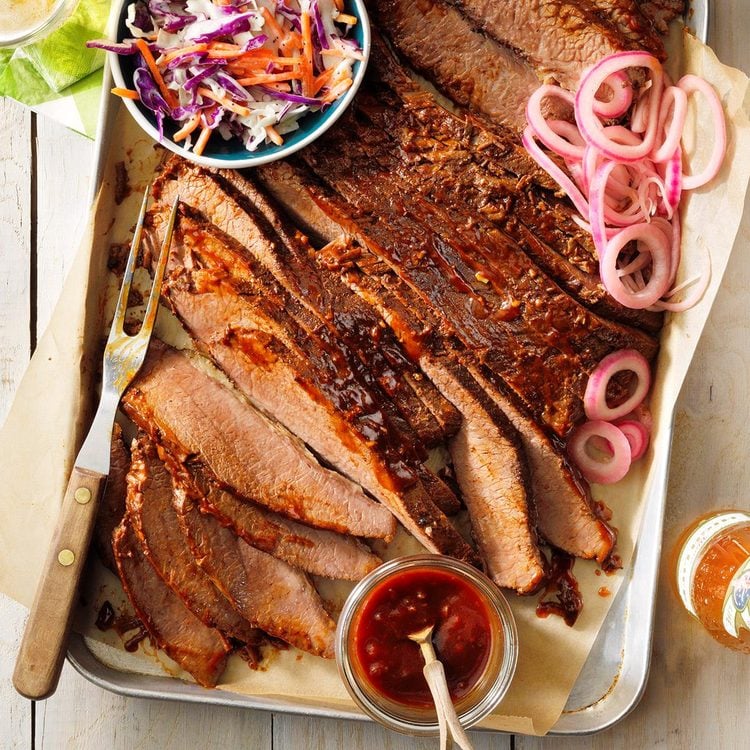
Texas-style beef brisket is known for its simplicity, deep smoky flavor, and tender texture. Unlike many other barbecue styles, Texas brisket relies on high-quality beef, a straightforward seasoning, low-and-slow cooking, and proper resting to achieve a rich, beef-forward taste with a dark, flavorful bark.
Ingredients
For the Brisket
- 1 whole beef brisket (10–14 pounds), preferably USDA Choice or Prime, with both flat and point intact
For the Dry Rub
- 3 tablespoons coarse kosher salt
- 3 tablespoons freshly ground black pepper
(Optional additions, not traditional but acceptable in some Texas kitchens)
- 1 teaspoon garlic powder
- 1 teaspoon onion powder
- 1 teaspoon smoked paprika
For Smoking
- Oak wood chunks or logs (traditional), or hickory as an alternative
- Yellow mustard or beef tallow (optional binder)
For Spritzing (Optional)
- 1 cup beef broth or water
- 1 tablespoon apple cider vinegar
Equipment Needed
- Offset smoker, pellet smoker, or charcoal grill set up for indirect heat
- Meat thermometer or probe thermometer
- Sharp boning knife
- Aluminum foil or unwaxed butcher paper
- Large cutting board
- Clean towel or insulated cooler for resting
Preparation
1. Selecting and Trimming the Brisket
Choose a brisket with good marbling, especially in the flat section. Marbling ensures moisture and tenderness during the long cooking process.
Place the brisket on a cutting board, fat side up. Trim the fat cap down to approximately 1/4 inch thickness. Remove any hard, waxy fat that will not render during cooking. Square off uneven edges to promote even cooking.
Flip the brisket over and remove any loose meat or excess fat from the underside. Be careful not to remove too much, as the fat helps protect the meat during smoking.
2. Seasoning the Brisket
Pat the brisket dry with paper towels. If using a binder, lightly coat the brisket with yellow mustard or melted beef tallow. This will not affect the final flavor but helps the seasoning adhere.
Generously season all sides of the brisket with the salt and black pepper mixture. The seasoning should form an even, visible layer. Press the rub into the meat without rubbing it off.
Let the brisket rest at room temperature for 45 to 60 minutes, or wrap and refrigerate overnight for deeper seasoning penetration.
Smoking the Brisket
3. Preparing the Smoker
Preheat your smoker to 225–250°F (107–121°C). Maintain clean, steady smoke; thin blue smoke is ideal. Avoid thick white smoke, which can cause bitterness.
Add oak wood chunks or logs gradually to maintain consistent smoke throughout the cook.
4. Smoking Process
Place the brisket on the smoker with the fat side facing the heat source. This allows the fat to render and baste the meat during cooking.
Insert a meat thermometer into the thickest part of the flat.
Smoke the brisket uncovered for approximately 6–8 hours, or until the internal temperature reaches around 160–170°F. During this phase, the brisket will develop a dark bark and absorb smoke.
Optionally spritz the brisket every 60–90 minutes to prevent the surface from drying out.
5. The Stall and Wrapping
At around 160–170°F, the brisket may enter a “stall,” where the temperature stops rising due to moisture evaporation.
Once a good bark has formed, wrap the brisket tightly in butcher paper or aluminum foil. Butcher paper is preferred in Texas barbecue as it preserves bark texture while retaining moisture.
Return the wrapped brisket to the smoker.
6. Finishing the Cook
Continue cooking at 250°F until the internal temperature reaches 200–205°F. More important than temperature is tenderness: a probe should slide into the meat with little resistance, similar to softened butter.
This stage may take an additional 4–6 hours depending on the size of the brisket.
Resting the Brisket
Remove the brisket from the smoker and keep it wrapped. Place it in an insulated cooler or wrap it in towels and let it rest for at least 1 hour, preferably 2–3 hours. Resting allows the juices to redistribute throughout the meat, resulting in a moist brisket.
Slicing and Serving
Unwrap the brisket and separate the point from the flat if desired. Slice the flat against the grain into 1/4-inch thick slices. The point can be sliced thicker or chopped.
Serve immediately with classic Texas sides such as white bread, pickles, onions, coleslaw, or potato salad. Sauce is optional and traditionally served on the side, not on the meat.
Tips for Success
- Maintain consistent smoker temperature throughout the cook
- Do not rush the process; brisket requires patience
- Always slice against the grain
- Quality beef and proper rest are as important as seasoning

Leave a Reply