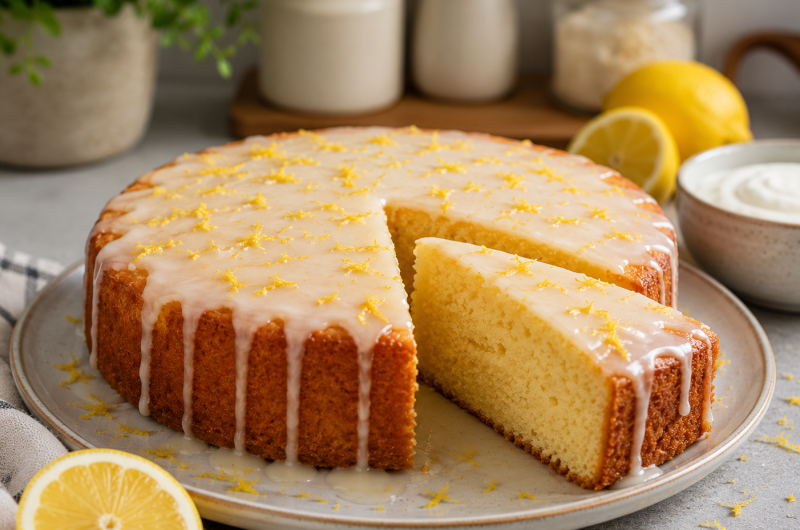
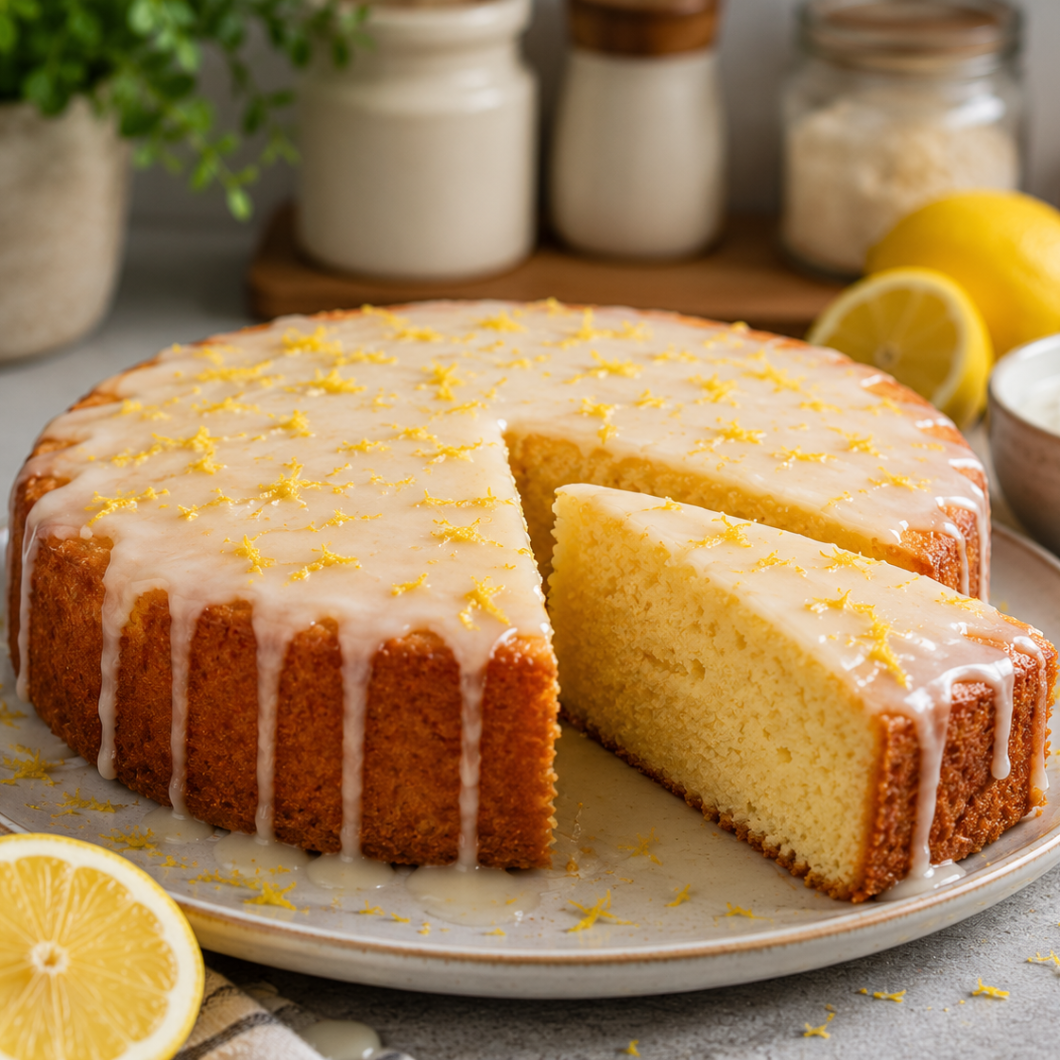
This Flourless Lemon Greek Yogurt Cake is a bright, moist, and naturally gluten-free dessert made with full-fat Greek yogurt, almond flour, fresh lemon juice, and fragrant lemon zest. It has a soft, tender crumb with a refreshing citrus flavor that makes every slice feel light without losing richness. The smooth lemon glaze adds sweetness and a glossy finish, making the cake suitable for brunch, afternoon tea, birthdays, spring celebrations, or simple family desserts. Because the recipe uses almond flour instead of traditional wheat flour, it is also an excellent choice for anyone searching for an easy gluten-free lemon cake.
Why This Recipe Is So Appealing
A good lemon cake should taste fresh, balanced, and naturally citrusy rather than overly sweet or artificial. This recipe achieves that balance by combining tangy Greek yogurt with both lemon juice and lemon zest. The yogurt adds creaminess and moisture, while the almond flour gives the cake a delicate nutty flavor and a satisfying texture. Unlike many gluten-free cakes that can become dry or crumbly, this one remains soft and moist for several days when stored correctly. It is simple enough for everyday baking but attractive enough to serve to guests.
A Naturally Gluten-Free Lemon Dessert
This cake does not require traditional all-purpose flour because almond flour provides the main structure. That makes the recipe naturally gluten-free without relying on complicated flour blends or special gums. Almond flour behaves differently from wheat flour because it contains natural oils and less starch, resulting in a softer and more tender crumb. The eggs and Greek yogurt help support the cake while baking, and baking powder provides lift. Anyone preparing the recipe for someone with a strict gluten-free diet should check that the baking powder, powdered sugar, and other packaged ingredients are certified gluten-free.
The Role of Full-Fat Greek Yogurt
Full-fat Greek yogurt is one of the most important ingredients in this cake because it provides moisture, richness, and a gentle tang. Its thick consistency helps create a smooth batter without making it watery. Greek yogurt also balances the sweetness of the granulated sugar and glaze, producing a cake that tastes refreshing rather than heavy. Low-fat yogurt may create a slightly drier texture, while regular yogurt usually contains more liquid and may make the batter too loose. Full-fat Greek yogurt therefore gives the most reliable texture and flavor.
Why Almond Flour Works Beautifully in Cake
Almond flour is made from finely ground almonds and brings natural richness to gluten-free baking. It gives this lemon cake a moist crumb and a subtle nutty background that pairs especially well with fresh citrus. Since almond flour absorbs liquid differently from wheat flour, measuring it accurately is important. Too much almond flour can make the cake dense, while too little may prevent it from setting correctly. For best results, spoon the almond flour into the measuring cup and level it gently instead of pressing it down.
Fresh Lemon Juice and Zest Create the Best Flavor
Both lemon juice and lemon zest are used because they provide different parts of the citrus flavor. Lemon juice contributes acidity and freshness, while the zest contains aromatic oils that create the strongest lemon fragrance. Using both ensures that the cake tastes lively and naturally lemony. Fresh lemons produce a cleaner and brighter flavor than bottled juice. When zesting, remove only the yellow outer layer and avoid the white pith beneath it, as the pith can introduce bitterness.
Why Room-Temperature Ingredients Matter
Room-temperature eggs and Greek yogurt blend more evenly than ingredients taken directly from the refrigerator. When all the wet ingredients are at a similar temperature, the batter becomes smoother and more uniform. This helps the cake rise evenly and prevents the almond flour from clumping. Cold ingredients may also make the batter feel thicker than expected. Setting the eggs and yogurt on the counter for a short period before mixing is a small preparation step that can noticeably improve the finished texture.
Balancing Sweetness and Tanginess
The cake contains granulated sugar, while the glaze uses powdered sugar. The granulated sugar sweetens the batter and supports browning during baking. The powdered sugar creates a silky glaze that dissolves smoothly with fresh lemon juice. Together, these ingredients provide enough sweetness to balance the tart lemon and tangy yogurt without covering their natural flavors. The result is a dessert that feels rich but remains fresh and pleasant, especially when served with berries or lightly whipped cream.
How Vanilla and Salt Improve the Cake
Vanilla extract and salt are used in small amounts, but both have an important effect. Vanilla softens the sharpness of the lemon and gives the cake a warmer, more rounded aroma. Salt strengthens the citrus flavor and balances the sweetness. Without salt, desserts can taste flat even when they contain plenty of sugar and lemon. These supporting ingredients do not dominate the recipe, but they help the main flavors taste clearer and more complete.
Preparing the Cake Pan Correctly
An 8-inch round cake pan is the best size for achieving the intended thickness and baking time. Greasing the pan and lining the bottom with parchment paper make the cake easier to remove after cooling. Almond flour cakes are often more delicate than wheat-based cakes, so proper pan preparation reduces the risk of sticking or breaking. After greasing, place a round piece of parchment paper over the base and smooth it flat before adding the batter.
Mixing the Wet Ingredients
The Greek yogurt, eggs, granulated sugar, lemon juice, lemon zest, and vanilla extract are whisked together before the almond flour is added. This ensures that the sugar begins dissolving and the eggs are fully distributed throughout the batter. The mixture should look pale, creamy, and slightly thick. Taking time to whisk until smooth creates a uniform foundation for the cake and prevents streaks of egg or yogurt from remaining in the batter.
Folding in the Dry Ingredients
The almond flour, baking powder, and salt should be added after the wet ingredients are smooth. A rubber spatula works well for folding because it allows the batter to be mixed gently without introducing unnecessary air. Continue folding only until no dry pockets remain. Overmixing is less of a concern with almond flour than with wheat flour, but excessive stirring can still make the batter heavier and reduce the cake’s delicate texture.
Understanding the Batter Consistency
The finished batter should be thick, smooth, and easy to spread. It will not look exactly like a traditional wheat-flour cake batter because almond flour creates a slightly denser mixture. However, it should still pour into the prepared pan without difficulty. After transferring the batter, smooth the surface with a spatula and tap the pan lightly on the counter. This helps release large trapped air bubbles and encourages an even top during baking.
Baking the Cake Evenly
The cake bakes at 350°F or 175°C for approximately 40 to 45 minutes. Placing it on the center oven rack promotes even heat circulation. The cake is ready when the top is lightly golden, the center feels set, and a toothpick inserted into the middle comes out mostly clean. A few moist crumbs are acceptable, but wet batter means the cake needs more time. Baking times can vary slightly between ovens, so checking near the end is important.
Preventing Excessive Browning
Almond flour can brown more quickly than ordinary flour because of its natural fat content. If the top of the cake becomes golden before the center has finished baking, place a loose piece of aluminum foil over the pan during the final ten minutes. Do not press the foil against the surface. This shields the top from direct heat while allowing the center to continue cooking. The cake should remain golden rather than becoming dark brown.
Cooling the Cake Without Breaking It
After baking, allow the cake to cool in the pan for about fifteen minutes. This resting period gives the structure time to settle, making the cake less likely to crack when removed. Run a thin knife gently around the edge if necessary, then carefully transfer the cake to a cooling rack. Let it cool completely before glazing. Because almond flour cakes are tender, handling them too soon can cause damage even when they are fully baked.
Making the Fresh Lemon Glaze
The lemon glaze is made by whisking powdered sugar with fresh lemon juice and lemon zest. The goal is a smooth consistency that is thick enough to coat the cake but fluid enough to drizzle naturally. Begin with two tablespoons of lemon juice and add the third only if needed. If the glaze is too thin, a little more powdered sugar will thicken it. If it is too thick, a few drops of lemon juice will loosen it.
Why the Cake Must Be Cool Before Glazing
Applying glaze to a warm cake causes the powdered sugar mixture to melt and soak into the surface. While that may add sweetness, it will prevent the cake from developing a neat, attractive finish. A completely cooled cake allows the glaze to stay visible, slowly flow down the sides, and set with a smooth texture. Cooling also gives the crumb time to firm, making the finished cake easier to slice cleanly.
Serving the Cake for Afternoon Tea or Brunch
This flourless lemon cake is especially well suited to tea, coffee, and brunch menus. Its bright citrus flavor pairs nicely with black tea, green tea, herbal tea, espresso, or freshly brewed coffee. Because the cake is moist and flavorful on its own, it does not require heavy toppings. A small slice can be served simply with the lemon glaze, while a more decorative presentation may include berries, whipped cream, or a thin lemon slice.
Pairing the Cake with Fresh Berries
Strawberries, blueberries, and raspberries bring color and freshness to each serving. Their natural sweetness and mild acidity complement the lemon without overpowering it. Fresh berries also make the dessert feel lighter and more suitable for spring or summer occasions. Arrange a small spoonful beside each slice or scatter berries across a serving platter. The cake should remain the main focus, so only a modest amount is needed.
Adding Whipped Cream for a Richer Presentation
A dollop of lightly sweetened whipped cream creates a soft contrast to the tangy lemon glaze. It adds creaminess without making the dessert as heavy as buttercream or frosting. The whipped cream should be served alongside individual slices rather than spread over the whole cake, especially if the cake will be stored. This keeps the presentation fresh and allows each person to choose how much cream they prefer.
Notes
Use Full-Fat Greek Yogurt
Full-fat Greek yogurt produces the richest texture and helps prevent dryness. Low-fat yogurt may be used, but the cake may feel slightly less moist. Regular yogurt is not ideal because its higher liquid content can loosen the batter. If regular yogurt is the only option, it would need to be strained first, but the original recipe is designed specifically for Greek yogurt.
Measure Almond Flour Accurately
Almond flour can compact easily inside a bag or container. Scooping directly with a measuring cup may result in too much flour and a dense cake. Spoon it lightly into the cup and level the top. A kitchen scale offers even greater accuracy. The flour should be finely ground rather than coarse almond meal, which may create a heavier and grainier crumb.
Avoid Overbaking
Overbaking is one of the most common causes of dry almond flour cake. Begin checking the cake near the forty-minute mark. The center should feel set, but the toothpick may still carry a few moist crumbs. The cake will continue firming as it cools. Waiting until the toothpick is completely dry can result in a less tender texture.
Do Not Open the Oven Too Early
Opening the oven door during the first part of baking can cause a sudden temperature drop. This may interrupt the rise and contribute to a sunken center. Leave the door closed for at least the first thirty minutes. After that point, check quickly and gently if necessary. If the cake still looks wet in the center, close the door and continue baking.
Allow Full Cooling Before Slicing
Although the cake may smell tempting when warm, slicing too early can make the center appear wet or fragile. Almond flour cakes continue settling as they cool. Waiting until the cake reaches room temperature produces cleaner slices and a more developed texture. If time allows, the cake can be chilled briefly after glazing and then returned to room temperature before serving.
Storing at Room Temperature
The cake can be kept in an airtight container at room temperature for up to two days. This method works best in a cool kitchen. Because the recipe contains Greek yogurt and a moist crumb, avoid leaving it uncovered or storing it in a warm environment. Covering the cake protects it from drying out and prevents it from absorbing odors.
Refrigerating the Cake
For longer storage, keep the cake in an airtight container in the refrigerator for up to five days. Refrigeration helps preserve freshness, although it can make the crumb feel slightly firmer. Allow individual slices to stand at room temperature before serving. This softens the almond flour crumb and brings out the lemon aroma more clearly.
Freezing Individual Slices
To freeze the cake, wrap cooled slices tightly in plastic wrap and place them in a freezer-safe container. They can be frozen for up to two months. Thaw the slices overnight in the refrigerator, then allow them to reach room temperature before serving. Freezing individual portions is convenient because only the required number of slices needs to be thawed.
Why This Flourless Lemon Greek Yogurt Cake Belongs in Your Recipe Collection
This easy Flourless Lemon Greek Yogurt Cake combines moist almond flour cake, creamy Greek yogurt, and fresh lemon flavor in a simple recipe that looks elegant enough for special occasions. It is naturally gluten-free, easy to mix, and finished with a bright lemon glaze that enhances every slice. The cake works well for brunch, tea parties, holidays, family desserts, and make-ahead entertaining. Its refreshing flavor, tender crumb, and straightforward preparation make it a dependable dessert for anyone who enjoys healthy-style lemon cakes made without traditional flour.
Flourless Lemon Greek Yogurt Cake
A moist, tender, and naturally gluten-free lemon cake made with full-fat Greek yogurt, almond flour, fresh lemon juice, and fragrant zest.
10
servings15
minutes45
minutes315
kcal30
minutes1
hour30
minutesIngredients
- For the Cake
1 cup full-fat Greek yogurt
3 large eggs
2 cups almond flour
¾ cup granulated sugar
2 tablespoons fresh lemon zest
¼ cup fresh lemon juice
1 teaspoon baking powder
1 teaspoon vanilla extract
¼ teaspoon salt
- For the Lemon Glaze
1 cup powdered sugar
2–3 tablespoons fresh lemon juice
1 teaspoon lemon zest
Directions
- Preheat the oven to 350°F (175°C). Grease an 8-inch round cake pan and line the bottom with parchment paper.
- In a large mixing bowl, combine the full-fat Greek yogurt, eggs, granulated sugar, fresh lemon juice, lemon zest, and vanilla extract.
- Whisk the wet ingredients until the mixture appears smooth, pale, creamy, and evenly combined.
- Add the almond flour, baking powder, and salt to the wet mixture.
- Fold gently with a rubber spatula until no dry pockets remain. Stop mixing as soon as the batter is smooth and uniform.
- Pour the batter into the prepared cake pan and spread the surface evenly with a spatula.
- Tap the pan lightly on the counter several times to release any large air bubbles.
- Place the pan on the center oven rack and bake for 40–45 minutes.
- Check the cake for doneness. The top should be lightly golden, the center should feel set, and a toothpick inserted in the middle should come out mostly clean.
- If the surface begins browning too quickly, loosely cover it with aluminum foil during the final ten minutes of baking.
- Remove the cake from the oven and let it cool inside the pan for 15 minutes.
- Carefully release the cake from the pan and transfer it to a cooling rack. Allow it to cool completely.
- To make the glaze, place the powdered sugar, two tablespoons of lemon juice, and lemon zest in a small bowl.
- Whisk until smooth. Add the remaining lemon juice gradually if the glaze needs to be thinner.
- Once the cake is completely cool, drizzle the lemon glaze over the top and allow some of it to run naturally down the sides.
- Let the glaze set briefly before slicing and serving.
Nutrition Facts
10 servings per container
- Amount Per ServingCalories315
- % Daily Value *
- Total Fat
18g
24%
- Total Carbohydrate
35g
13%
- Protein 8g 16%
* The % Daily Value tells you how much a nutrient in a serving of food contributes to a daily diet. 2,000 calories a day is used for general nutrition advice.
Nutrition Facts
10 servings per container
- Amount Per ServingCalories315
- % Daily Value *
- Total Fat
18g
24%
- Total Carbohydrate
35g
13%
- Protein 8g 16%
* The % Daily Value tells you how much a nutrient in a serving of food contributes to a daily diet. 2,000 calories a day is used for general nutrition advice.