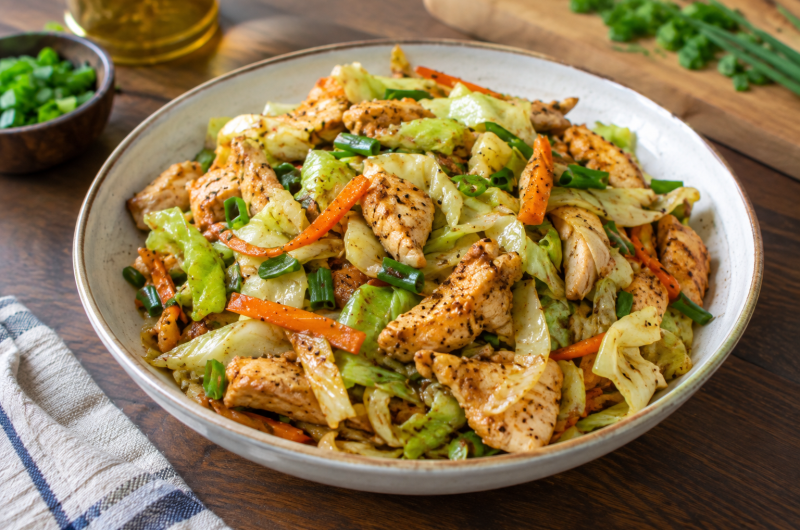
There are some meals that you make when you want something comforting but don’t want to spend the whole evening in the kitchen. This chicken and cabbage stir fry is exactly that kind of meal for me. It is simple, filling, inexpensive, and the best part is that you can have it on the table in about half an hour.
What I really like about this recipe is that it doesn’t need a long list of sauces or seasonings to taste good. The chicken brings plenty of flavor, while the onion and cabbage become soft and buttery as they cook. A little garlic and mild paprika are enough to bring everything together.
It’s one of those recipes where the ingredients look very ordinary at the beginning, but once they start cooking, everything changes.
Why This Chicken and Cabbage Combination Works
Chicken and cabbage might not sound like the most exciting combination at first, but give it a little time in the skillet and you’ll see why it works.
The chicken is cut into bite-sized pieces, so it cooks fairly quickly. I like to cook it just until it is done and then take it out of the pan for a while. This keeps it from sitting in the skillet while the cabbage cooks.
Then comes the cabbage.
And there is a lot of cabbage in this recipe.
That is actually one of the things I enjoy most about it. The cabbage starts out taking up a surprising amount of room in the skillet, but as it cooks, it softens and settles down. The pieces at the bottom begin to wilt first, making it easier to stir everything around.
The onion cooks right along with it, becoming softer and lightly browned. By the time the garlic and paprika go in, the whole kitchen smells completely different.
You Only Need Simple Seasoning
There’s no complicated seasoning mixture here.
The main ingredients doing the work are:
- Salt and pepper
- Fresh garlic
- Mild paprika
- Onion
- Butter
- Olive oil
That’s really all you need to turn the chicken and cabbage into a satisfying meal.
The paprika gives the dish that familiar, warm flavor, while the garlic adds just enough sharpness. And because cabbage needs a good amount of seasoning to really bring out its flavor, don’t be afraid of the salt.
I usually taste everything near the end and adjust it from there. That is much easier than trying to guess the perfect amount of seasoning at the beginning.
Getting the Chicken Ready
For this recipe, I use boneless, skinless chicken breasts. Cut them into bite-sized pieces so they cook evenly and are easy to eat once everything is mixed together.
You don’t need to do anything complicated to the chicken before it goes into the skillet.
Just add the olive oil and chicken to the pan and season it with salt and pepper.
I like using medium-high heat here because the chicken needs to cook fairly quickly. Give the pieces a stir fairly often while they cook so that they brown and cook evenly instead of sitting in one spot.
The chicken should take around 5 to 7 minutes.
The important thing is not to keep cooking it longer than necessary at this stage. You only want it just cooked through before moving it out of the pan.
Once it’s ready, transfer the chicken to a paper towel-lined plate and leave it there while you work on the vegetables.
Why I Take the Chicken Out
This little step makes a difference.
It might seem easier to leave the chicken in the skillet and throw the cabbage right on top, but the cabbage needs some space and time to soften. Taking the chicken out gives the vegetables room to cook properly.
It also means the chicken isn’t being cooked over and over again while you’re waiting for the cabbage to become tender.
And since the chicken goes back into the skillet later, you don’t have to worry about it being away from the dish for long.
Preparing the Onion and Cabbage
- Once the chicken is out of the pan, it’s time for the onion.
- Add the butter and chopped onion to the same skillet. There’s no need to clean the pan first. Let the onion sauté for about 3 minutes.
- This is where the smell starts getting really good.
- The onion softens in the butter, and some of it will begin to lightly brown. That little bit of browning adds another layer of flavor without needing any extra ingredients.
- While the onion cooks, the cabbage is ready to go.
- Use a medium green cabbage, remove the core, and chop it. You don’t have to stress about getting every piece exactly the same size. This is a relaxed skillet meal, so there’s no need to make the cabbage look perfect.
Don’t Worry Too Much About the Size of the Cabbage
One thing worth remembering is that cabbage can vary quite a bit in size.
The recipe calls for a medium cabbage, but you don’t have to stand there worrying about getting an exact weight. Around 2 pounds before removing the outer leaves and core is a good guide.
If you end up with a larger cabbage, you can simply use an appropriate amount.
The important thing is having enough cabbage for the recipe without becoming obsessed with measuring every last piece.
Letting the Cabbage Cook Down
After the onions have had their few minutes in the butter, add the chopped cabbage to the skillet.
At first, it may look like you have far too much cabbage.
You probably do.
But don’t worry.
Start stirring and tossing it as it cooks. Keep the pan uncovered and stir fairly often. The cabbage at the bottom will begin to wilt first, and once that happens, the whole pile becomes much easier to manage.
Cook the cabbage for about 10 to 15 minutes, depending on how tender you want it.
This is one of those parts of the recipe where you can pay attention to the food rather than watching the clock too closely.
If you like your cabbage softer, let it continue cooking until it reaches the texture you prefer. If you want a little more texture, you can stop once it reaches the tenderness you like.
While it cooks, the onions will continue to soften and lightly brown.
And this is where cabbage really starts showing what it can do.
Give the Cabbage Enough Salt
Because there is so much cabbage in this dish, seasoning matters.
Cabbage can taste fairly mild on its own, but once it cooks down with butter, onion, salt, and pepper, it becomes much more flavorful.
Don’t be afraid to taste as you go.
You can always add more seasoning later, but you want enough salt to bring out the flavor of all those vegetables.
The Kitchen Starts Smelling Amazing
At this point, you should have softening cabbage, buttery onions, and plenty of flavor developing in the skillet.
This is the stage where I like to slow down a little and let the vegetables do their thing.
There is no need to rush the cabbage. Keep stirring it often enough that it cooks evenly, but let it spend enough time in the skillet to become tender.
Once the cabbage is where you want it, the next step is where the garlic and paprika come in.
That is when this simple chicken and cabbage combination really comes together.
The chicken is already cooked and waiting on the side, the cabbage and onion are soft and flavorful, and now there are only a few final steps before everything becomes one complete skillet meal.
Bringing the Chicken and Cabbage Together
By now, the cabbage should be soft and the onions should have taken on a little color. This is the point where the skillet starts to smell especially good, and there isn’t much left to do.
The chicken is already cooked and waiting on the side, so now we can finish the vegetables and bring everything back together.
Add the Garlic and Paprika
Once the cabbage has reached the tenderness you like, stir in the minced garlic and mild paprika.
This doesn’t need much time.
Just stir everything together so the garlic and paprika are spread throughout the cabbage and onions. The paprika gives the vegetables a warm, familiar flavor, while the garlic adds that little extra something that makes the whole skillet taste more complete.
If you really enjoy garlic, you can use more than the suggested amount. The same goes for paprika. This is a recipe where you can taste as you go and make small adjustments according to what you like.
I wouldn’t make those adjustments all at once, though. Add a little, stir, taste, and decide if it needs more.
That way, the final dish tastes the way you want it to.
Add the Chicken Back to the Skillet
Now it’s time to bring the chicken back.
Add the cooked chicken to the cabbage mixture and stir everything together. The chicken only needs a few minutes to heat through because it was already cooked earlier.
Keep stirring fairly often while everything warms together.
This is a quick final step, so there’s no reason to leave the chicken cooking for a long time. You simply want it heated through and mixed well with the cabbage, onions, garlic, and paprika.
And this is the part I like about cooking the chicken separately at the beginning. The chicken gets its own time in the pan, the cabbage gets its own time to soften, and then everything gets combined at the end.
You end up with tender pieces of chicken throughout all those soft, buttery vegetables.
Taste Before Serving
Before taking the skillet off the heat, give it a taste.
This is especially important with this recipe because there is quite a lot of cabbage. You may find that it needs more salt and pepper than you expected.
Add salt and pepper as needed, stir everything together, and taste again.
There isn’t one exact amount of salt that will work for everyone here, so I prefer treating the recipe as a starting point and adjusting it at the end.
The goal is for the cabbage, onions, and chicken to all have enough seasoning so that the dish doesn’t taste flat.
Once everything is hot and properly seasoned, serve it immediately.
A Simple Meal Without a Complicated Sauce
One of the nicest things about this chicken and cabbage stir fry is that you don’t need to make a separate sauce.
There are no long lists of ingredients to mix together.
Instead, the flavor comes from the ingredients cooking together in the skillet.
The olive oil is used with the chicken, the butter gives the onion and cabbage a rich taste, and the garlic and paprika finish everything off.
That simplicity is exactly what makes this recipe useful when you want something quick.
You can make it on a busy day without needing to plan too far ahead.
What I Like About Serving It
This is a fairly complete meal on its own, so you don’t have to add a lot around it.
If you want something creamy alongside the cabbage and chicken, a dollop of sour cream works nicely. It adds a little contrast to the warm skillet.
The recipe is also naturally low-carb as written.
If you’re not concerned about keeping the meal low-carb, you can serve it with rice to make the meal a little more substantial.
A simple side salad is another easy option.
There’s no need to make the whole meal complicated. The chicken and cabbage are already doing most of the work.
A Few Easy Ways to Change It
I like this recipe as it is because the ingredient list is already simple, but there are a few ways to adjust it without changing the basic idea.
Try a Different Paprika
The recipe uses mild paprika, which keeps the flavor classic and easygoing.
If you prefer something with a little more character, you can use:
- Hot paprika
- Smoked paprika
You can also increase the amount of paprika if you enjoy that flavor.
There is no need to be overly strict about it. Taste the dish and adjust it until it works for you.
Use Chicken Thighs Instead
Chicken breast works very well here because it is cooked just until done and then added back at the end.
But if you prefer chicken thighs, they can also be used.
The important thing is still to avoid overcooking the chicken.
Add More Garlic
If garlic is one of those ingredients you always wish recipes used more of, you don’t have to stop at the suggested amount.
The recipe already includes garlic, but you can add more if that’s what you enjoy.
Since the whole dish is based around simple flavors, small adjustments like this can make it feel more suited to your own kitchen.
Don’t Overthink the Cabbage
One thing I would definitely keep in mind when making this is that cabbage doesn’t need to be treated like a delicate ingredient.
It starts out bulky, but it cooks down quite a lot.
If your skillet looks completely full when you first add the cabbage, don’t panic.
Just keep stirring and tossing it.
The cabbage at the bottom will begin to wilt first. As it softens, the amount in the pan becomes easier to manage, and you can continue stirring everything together.
This is also why you don’t need to be overly precise about the size of the cabbage.
A cabbage around 2 pounds before removing the outer leaves and core is a good guide, but there is some flexibility.
Once you remove the parts you aren’t using and chop it, you’ll have plenty for the skillet.
What Makes the Leftovers Worth Saving
I actually think this is one of those meals that works surprisingly well the next day.
The chicken stays tender, even after being reheated in the microwave, and the cabbage remains enjoyable.
So if you have leftovers after dinner, there is no need to feel like you’re stuck eating something that won’t be as good the second time around.
Simply let the food cool and place it in a covered container in the refrigerator.
The leftovers can be kept in the fridge for 3 to 4 days.
When you’re ready to eat them, reheat them until they’re hot.
What About Freezing?
I wouldn’t particularly recommend freezing this recipe.
The chicken itself isn’t the issue. The cabbage is more likely to change texture after freezing and thawing.
You can certainly experiment if you want to, but if you know you’re making this meal ahead, I would rather keep it refrigerated and enjoy it within the recommended 3-to-4-day window.
A Few Things to Remember
If you’re making this for the first time, there are really only a few things worth keeping in mind.
- Cut the chicken into bite-sized pieces so it cooks evenly.
- Don’t overcook the chicken at the beginning; it goes back into the skillet later.
- Give the cabbage time to soften.
- Stir the cabbage fairly often while it cooks.
- Don’t worry if the skillet looks crowded at first. The cabbage will wilt down.
- Use enough salt to bring out the flavor of all that cabbage.
- Taste before serving and adjust the salt and pepper.
- Serve immediately once everything is hot.
That’s really the beauty of this recipe.
There isn’t a complicated technique hiding behind it. You cook the chicken, let the onion and cabbage soften, season them with garlic and paprika, and then bring everything together.
My Favorite Way to Think About This Meal
When I make a skillet like this, I don’t think of it as something that needs to be fancy.
It’s the kind of food that makes sense for an ordinary evening.
You have chicken, cabbage, onion, garlic, butter, olive oil, and a little paprika. That’s enough to make something warm and satisfying without filling the kitchen with complicated steps or a sink full of dishes.
The cabbage becomes soft and buttery, the onion gets lightly browned, and the chicken stays tender because it isn’t cooked to death in the pan.
And once you taste it, you understand why cabbage can be such a good main part of a simple meal.
Sometimes the most ordinary ingredients really don’t need much help.
Ready to Serve
Once you’ve tasted the finished stir fry and adjusted the salt and pepper, it’s ready.
Spoon it onto plates while it’s hot. If you want, add a little sour cream on top. If you’re serving it with rice or a side salad, those can go alongside.
And that’s it.
A quick chicken dinner, plenty of tender cabbage, sweet softened onion, garlic, and paprika—all made in one skillet.
It’s inexpensive, straightforward, and doesn’t require much planning. Most importantly, it tastes like the kind of homemade meal you can make again and again when you want something comforting without spending hours cooking.
For the complete quantities and cooking steps, the recipe card below keeps everything together in a simple format.
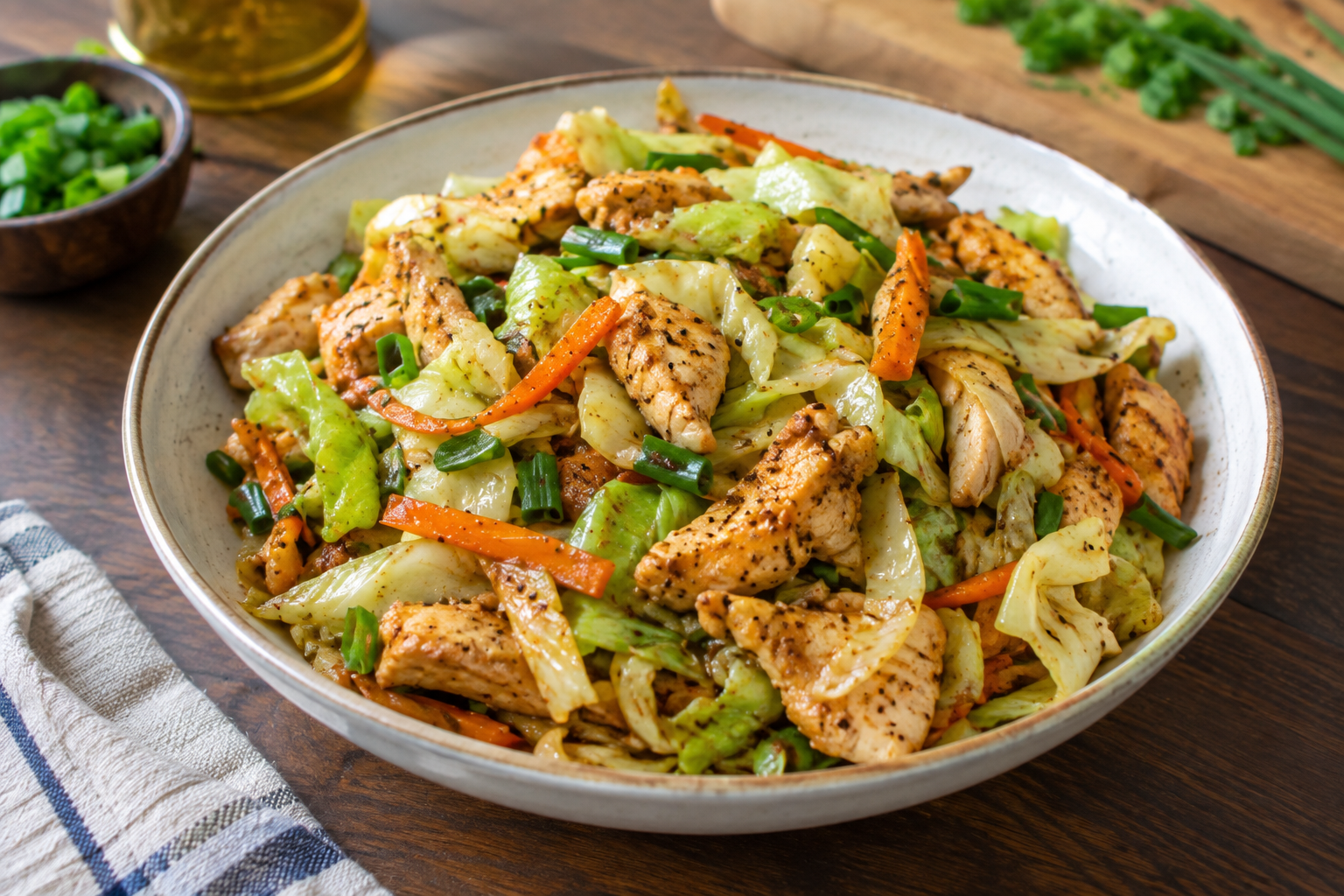
Easy Chicken and Cabbage Stir Fry
 Recipe by admin1
This easy chicken and cabbage stir fry is an inexpensive meal that’s ready in about half an hour. Tender bites of chicken are cooked with soft cabbage and onions, then finished with garlic and paprika for a simple, comforting skillet dinner.
4
servings10
minutes25
minutes256
kcalIngredients
2 large chicken breasts, cut into bite-size pieces
1 tablespoon olive oil
Salt & pepper, to taste
1 tablespoon butter
1 medium onion, chopped
1 medium green cabbage, cored and chopped
2 cloves garlic, minced
1 teaspoon paprika
Directions
- Add the olive oil and chicken to a skillet. Season with salt and pepper. Turn the burner to medium-high and sauté for about 5–7 minutes, stirring fairly often, until the chicken is just cooked through.
- Transfer the chicken to a paper towel-lined plate.
- Add the butter and chopped onion to the same skillet. Sauté for about 3 minutes.
- Add the chopped cabbage. Cook uncovered for about 10–15 minutes, stirring fairly often, until the cabbage is soft or reaches your preferred tenderness. The cabbage at the bottom of the pan will begin to wilt after a few minutes, making it easier to stir. The onions should also begin to lightly brown.
- Stir in the minced garlic and paprika.
- Return the cooked chicken to the skillet and cook for a few minutes, stirring fairly often, until everything is heated through.
- Taste and add more salt and pepper if needed. Serve immediately.
Notes
- You don’t have to measure the cabbage perfectly. A cabbage weighing around 2 pounds before removing the outer leaves and core works well.
- Mild paprika is used in the recipe, but hot paprika or smoked paprika can also be used if preferred.
- Since there is a lot of cabbage in this dish, taste before serving and add enough salt to bring out its flavor.
- Leftovers can be stored in a covered container in the refrigerator for 3–4 days.
- Freezing isn’t recommended because the cabbage may change texture.
Nutrition Facts
- Total number of serves: 4
- Calories: 256kcal
- Fat: 10g
- Saturated Fat: 3g
- Cholesterol: 80mg
- Sodium: 199mg
- Potassium: 856mg
- Carbohydrates: 17g
- Fiber: 6g
- Sugar: 9g
- Protein: 27g
- Vitamin A: 590mcg
- Vitamin C: 87mg
- Calcium: 105mg
- Iron: 2mg