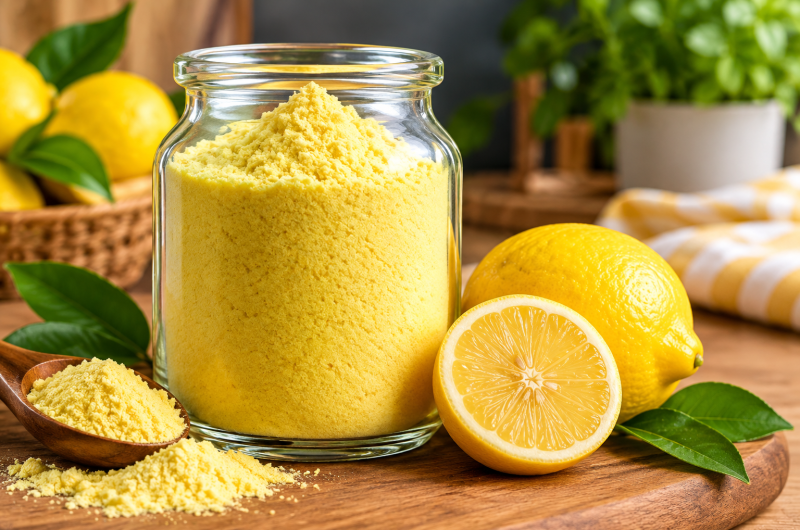
If you love a strong lemon flavor in your baking and cooking, homemade lemon powder is one of those little kitchen ingredients that is surprisingly useful.
It gives you a concentrated citrus flavor without adding the extra moisture that comes with lemon juice. It also mixes much more easily into flour and other dry ingredients than fresh lemon zest, so you don’t have to worry about little clumps of zest getting stuck together.
The best part is that once you make a batch, you can keep it in your pantry for up to a year. So whenever you want a little extra lemon flavor, you already have it ready to use.
The process is simple: slice the lemons, dry them slowly in a very low oven, let them cool, and grind them into a fine powder.
Why I Like Keeping Lemon Powder in the Pantry
Fresh lemons are wonderful, but there are times when lemon powder is simply more convenient.
It is especially useful when you want plenty of lemon flavor without adding additional liquid to a recipe.
Here are some of the main reasons to make it:
- Strong citrus flavor without excess moisture.
- Doesn’t clump the way fresh lemon zest can.
- Easy to keep in your pantry for up to one year.
- Useful in both sweet and savory recipes.
- Can be added to homemade seasoning blends.
- A little goes a long way because the flavor is concentrated.
If you regularly make lemon cakes, muffins, buttercream, chicken dishes, or homemade seasonings, having a jar of lemon powder ready can be very handy.
What Exactly Is Lemon Powder?
There isn’t anything complicated hiding in this recipe.
Lemon powder is simply made by taking fresh organic, unwaxed lemons, slicing them, drying the slices until they are completely crisp, and then grinding them into a fine powder.
There is no salt, sugar, or other additive involved.
The finished powder has a much more concentrated lemon flavor than fresh zest. Because the lemons are dried in the oven, the flavor also develops a deeper character.
What Does Homemade Lemon Powder Taste Like?
Because these lemons are dried slowly in the oven rather than simply using fresh zest, the finished flavor is deeper and slightly roasted.
The source describes it as having a subtle caramel note alongside the intense lemon flavor.
That means you don’t need to use a large amount to make a difference in a recipe.
What You Need
There is only one ingredient:
- 12 organic, unwaxed lemons
You will also need a few basic pieces of kitchen equipment to prepare them.
Equipment
- A sharp knife
- A couple of large baking trays
- Baking parchment
- A spice grinder
- A small bowl
A mandoline slicer is optional. It can help you cut the lemons into more evenly sized slices.
If you use one, set it to approximately 4mm.
Do You Need a Dehydrator?
No.
You can make this lemon powder entirely in your oven using a very low temperature.
If you already own a dehydrator, you can use it instead. The flavor will be somewhat lighter and less rich than the oven-dried version, but it will still give you a zingy citrus powder.
One advantage of using a dehydrator is that there is less risk of the lemon slices burning.
Preparing the Lemons
The way you slice the lemons matters because you want them to dry evenly.
Slice Them as Evenly as Possible
Start by slicing the lemons thinly using a very sharp knife.
Try to keep the slices as uniform as you can.
If some slices are much thicker than others, they may need longer to dry, while thinner pieces can become ready sooner.
A mandoline can help if you want more consistent slices.
One Important Tip About the Seeds
Don’t try to remove the seeds before drying the lemon slices.
Removing them while the lemon is fresh can damage the membrane of the fruit and leave the slices more likely to burn.
Instead, leave the seeds in while the lemons are drying.
Once the slices are completely dried, the seeds can be popped out before you grind the lemons.
Watch for Damaged Slices
If any lemon slices are ripped, it’s better to discard them before putting the trays into the oven.
These damaged pieces have a tendency to burn.
It is worth taking a moment to check the slices before arranging them on the trays.
Drying the Lemon Slices
This is the longest part of the process, but it doesn’t require much work.
Start by preheating the oven to:
80°C / 60°C fan
Line a couple of large baking trays with baking parchment.
Arrange the lemon slices on the prepared trays.
Try not to worry about making them look perfect. The important thing is that the slices are spread out and able to dry properly.
The First Two Hours
Place the trays in the very low oven and bake the lemon slices for 2 hours.
After those first two hours, carefully turn each lemon slice over.
This helps the slices dry evenly on both sides.
The Second Two Hours
Return the trays to the oven and bake for another 2 hours.
The total drying time is around 4 hours, but don’t treat four hours as an exact rule.
The thickness of your slices can affect how quickly they dry.
Check the Lemons Regularly
This is particularly important if you sliced the lemons by hand.
Some slices may be ready around 3½ hours, while others may need closer to the full 4 hours.
So keep an eye on them as they dry.
You want them completely dry and crisp, not soft or damp.
How to Tell When the Lemons Are Ready
Don’t rely only on the timer.
Look at the actual lemon slices.
They should be:
- Crisp, rather than soft.
- Not damp to the touch.
- Translucent with a papery texture.
- Golden yellow.
Some slices may become slightly browner than others, and that’s okay.
However, if a slice is becoming black, discard it.
The goal is dried golden lemon slices, not burnt lemon.
Cooling and Grinding
Once the lemon slices are completely dry, take them out of the oven and let them cool.
Before grinding, remember to remove the dried seeds.
Then it’s time to turn the slices into powder.
Grind in Small Batches
Don’t fill the spice grinder too much.
Place a small amount of dried lemon slices into the grinder at a time. Around 10 slices is suggested, but you should also follow the maximum filling amount recommended for your particular grinder.
Grind according to your grinder’s instructions for about one minute.
The dried lemons should break down into a golden powder.
But don’t worry if the first grind isn’t perfectly fine.
Grind It Twice
This is one of the most useful steps in the whole process.
After the first grind, there may still be larger pieces or clumps in the powder.
Here’s what to do:
- Scrape the first batch of powder out of the grinder.
- Place it in a small bowl.
- Whisk the powder together to break up the larger clumps.
- Return it to the grinder.
- Grind it a second time.
The second grind should give you a much finer, powdery texture.
Storing Homemade Lemon Powder
Once all the dried lemon has been ground, transfer the finished powder into an airtight glass jar.
Keep the jar in a cool, dark place.
Stored this way, the lemon powder can keep for up to one year.
That makes it particularly useful to have in the pantry because you don’t have to make a new batch every time a recipe calls for lemon zest.
How to Use Lemon Powder
Once you have a jar of homemade lemon powder, there are plenty of ways to use it.
Replace Lemon Zest
The powder can be used in recipes whenever lemon zest is called for.
The source gives this guideline:
1 teaspoon lemon powder = 1 tablespoon lemon zest
It is especially useful in recipes where you want lemon flavor without adding moisture.
Add It to Baking
Lemon powder works well in recipes such as:
- Lemon poppy seed muffins
- Lemon drizzle cake
- Lemon cheesecake
- Lemon buttercream
Because the powder is dry, you can mix it into the flour or other dry ingredients without worrying about fresh zest clumping together.
Make Homemade Seasonings
This is where having a jar of lemon powder becomes especially useful.
You can combine it with other ingredients to make:
- Lemon sugar — mix lemon powder with sugar.
- Lemon salt — blend it with salt.
- Lemon pepper — combine it with pepper.
- Seasoning blends — mix it with dried herbs and spices.
You can then use these homemade combinations to season meat and vegetables.
Use It in Savory Recipes
Lemon powder isn’t only for desserts.
You can add a pinch to:
- Chicken
- Lamb
- Pork
- Fish
- Breaded recipes
- Pasta sauces
It can also be stirred into mayonnaise to make lemon mayo.
Add It to Tea
A little lemon powder can also be stirred into black tea for an easy citrus flavor.
You Can Also Use Leftover Lemon Peels
You don’t necessarily have to use whole lemon slices every time.
If you’re already juicing a large number of lemons, you can save the leftover peels and dry those instead.
This is a useful way to make use of something that might otherwise be discarded.
If you want to reduce the bitter flavor, you can carefully remove the pith from the peels before drying them.
On the other hand, if you like that subtle bitter note, you can leave it in.
Try Other Citrus Powders
Once you’ve made lemon powder, the same idea can be used with other citrus fruits.
Some variations to try include:
- Orange powder
- Grapefruit powder
- Lime powder
Each one gives you another homemade citrus ingredient to keep in the pantry.
A Few Important Tips to Remember
Before making a batch, these are the points I would keep closest at hand:
- Use organic, unwaxed lemons.
- Slice the lemons as uniformly as possible.
- A mandoline can be set to around 4mm.
- Don’t remove the seeds before drying.
- Remove the seeds before grinding.
- Discard ripped slices because they can burn.
- Check the lemons regularly during drying.
- The slices should be crisp, dry, translucent, and golden.
- Grind the dried lemons twice for a finer powder.
- Store the finished powder in an airtight glass jar.
- Keep it somewhere cool and dark.
- The powder can last for up to one year.
Once the lemons are completely dried and ground, that’s really all there is to it. You end up with a concentrated homemade lemon ingredient that is ready whenever you need a little extra citrus flavor.
Medical Disclaimer
Lemon powder is a food ingredient and is not intended to diagnose, treat, or prevent any medical condition. If you have a health concern or dietary restriction, consult a qualified healthcare professional for personalized advice.
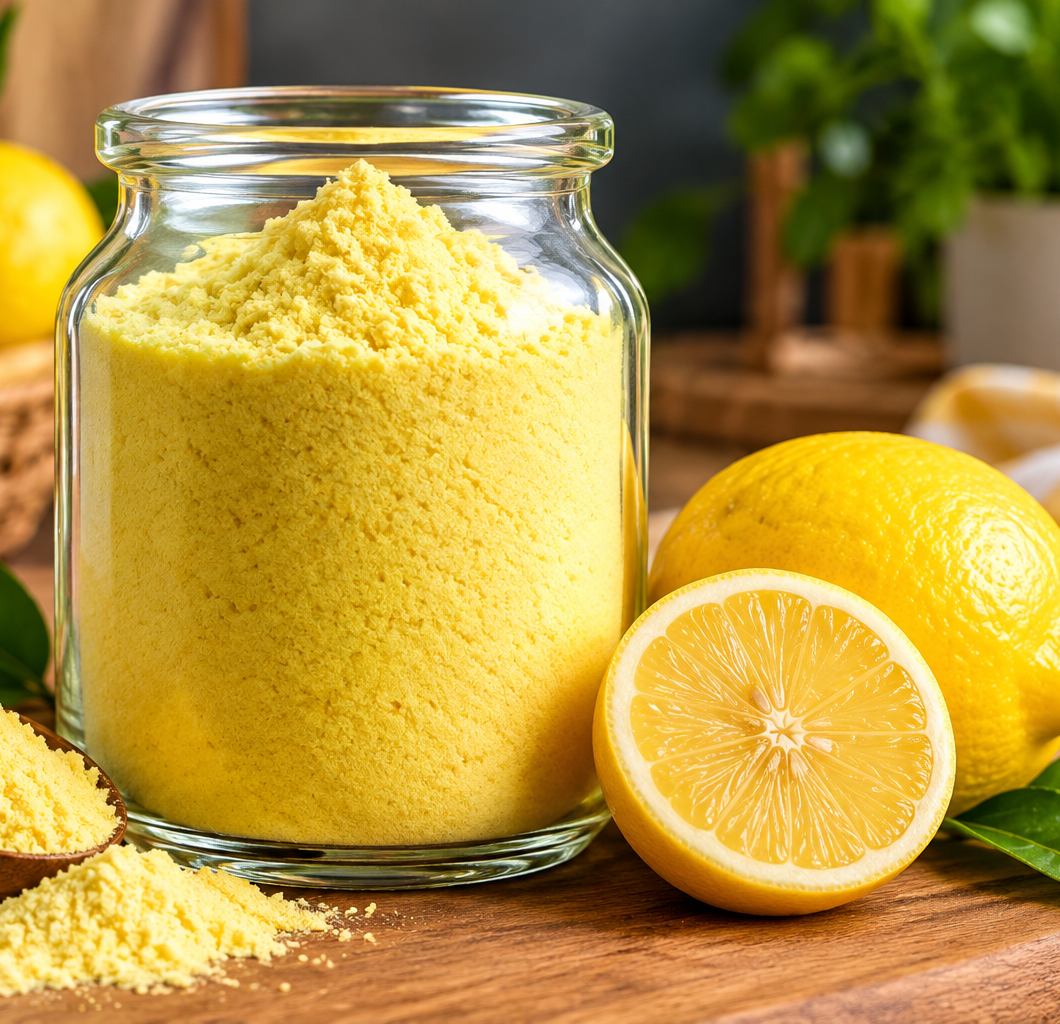
Homemade Lemon Powder
 Recipe by admin1
A simple way to turn fresh organic lemons into a concentrated lemon powder that can be used in baking, drinks, savory recipes, and homemade seasoning blends.
30
servings15
minutes3
hours13
kcalIngredients
12 organic, unwaxed lemons
Directions
- Preheat the oven to 80°C / 60°C fan and line a couple of large baking trays with baking parchment.
- Slice the lemons as thinly and uniformly as possible using a sharp knife or a mandoline set to about 4mm.
- Discard any ripped lemon slices, as they can burn more easily.
- Place the lemon slices on the prepared baking trays.
- Bake for 2 hours.
- Turn each lemon slice over.
- Bake for another 2 hours, checking regularly because the exact drying time can vary depending on the thickness of the slices.
- Remove the lemons when they are crisp, dry, translucent, papery, and golden yellow. Discard any pieces that are becoming black.
- Let the dried lemon slices cool completely.
- Remove the seeds.
- Grind the dried lemon slices in small batches in a spice grinder, following the grinder’s maximum capacity. Grind for about 1 minute.
- For a finer powder, remove the first grind, whisk it together in a small bowl, and grind it again.
- Transfer the finished lemon powder to an airtight glass jar.
- Store in a cool, dark place for up to 1 year.
Notes
- Don’t remove the seeds before drying the lemon slices.
- Check the slices regularly, as some may be ready around 3½ hours.
- Use only completely dried slices for grinding.
- 1 teaspoon lemon powder can replace 1 tablespoon lemon zest.
- Lemon powder can be used in cakes, muffins, buttercream, tea, savory recipes, and homemade seasoning blends.