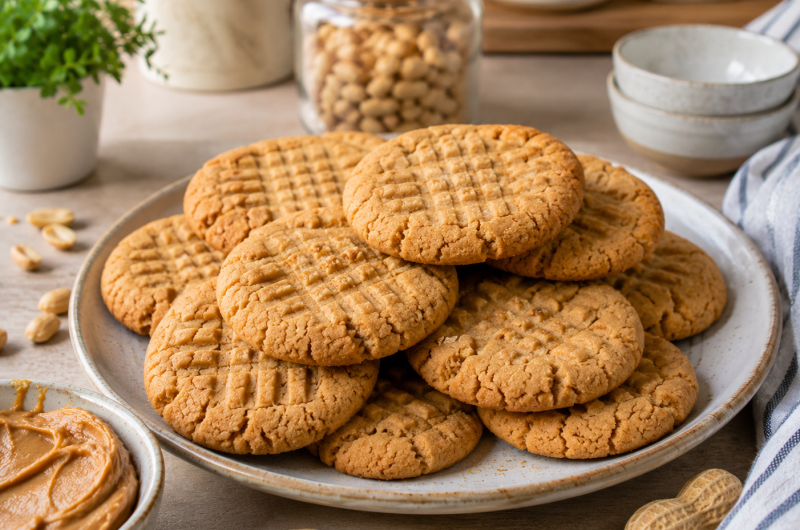
These Gluten Free Peanut Butter Cookies combine a rich nutty flavor, soft centers, lightly crisp edges, and the familiar crisscross pattern found on classic peanut butter cookies. They are made with everyday baking ingredients and a dependable gluten-free flour blend, so the recipe is approachable even for someone who is new to gluten-free baking. The dough is easy to mix, needs only a short chilling period, and bakes in about ten to twelve minutes. These homemade peanut butter cookies are an excellent choice for afternoon snacks, holiday cookie trays, school events, family gatherings, or any moment when you want a simple sweet treat.
Why These Cookies Are Popular
A well-made gluten-free cookie should taste like a delicious cookie first, rather than a substitute for something else. This recipe creates that familiar peanut butter cookie experience through a carefully balanced mixture of creamy peanut butter, softened butter, brown sugar, granulated sugar, egg, vanilla, and gluten-free all-purpose flour. Brown sugar adds moisture and chewiness, while granulated sugar helps the edges develop a light crispness. A short chilling period improves the shape and prevents excessive spreading. The finished cookies are tender, flavorful, and sturdy enough to store, freeze, pack, or serve on a dessert platter.
A Classic Peanut Butter Cookie Made Without Gluten
Traditional peanut butter cookies usually contain wheat flour, but this version uses a gluten-free all-purpose flour blend instead. Choosing a blend that already contains xanthan gum is important because xanthan gum helps hold the dough together and supports the cookie’s structure. With the right flour, there is no need for complicated flour combinations or extra binders. The cookies bake with attractive crinkled tops and remain soft in the middle, making them suitable for people who avoid gluten without changing the familiar flavor of the classic recipe.
The Role of Creamy Peanut Butter in the Dough
Creamy peanut butter gives the cookies their main flavor and contributes to their soft, rich texture. Traditional creamy peanut butter generally produces the most consistent dough because the oil and solids remain evenly combined. Natural peanut butter may separate in the jar, so it must be stirred very thoroughly before measuring. If too much separated oil enters the dough, the cookies may spread more than expected. Chunky peanut butter can create additional texture, but creamy peanut butter provides the smoothest dough and the softest finished cookie.
Why Softened Butter Creates Better Cookies
Softened unsalted butter blends smoothly with the brown and granulated sugars, creating a light base for the cookie dough. Butter that is too cold will not cream properly, while melted butter can make the cookies spread too quickly. The butter should feel soft enough to press with a finger but should not look oily or melted. Beating it with the sugars introduces small pockets of air that improve the cookie’s tenderness. Using unsalted butter also allows the measured salt in the recipe to control the final flavor more accurately.
Brown Sugar and Granulated Sugar Work Together
The recipe uses both brown sugar and granulated sugar because each sweetener affects the cookies differently. Brown sugar contains moisture and gives the cookies their soft, chewy centers. It also adds a mild caramel-like flavor that pairs naturally with peanut butter. Granulated sugar supports spreading, browning, and lightly crisp edges. Together, the two sugars create a balanced texture that is neither too cakey nor too crunchy. Creaming them thoroughly with the softened butter also helps distribute sweetness evenly throughout the dough.
Egg and Vanilla Support Flavor and Structure
The egg provides moisture, richness, and structure while helping bind the gluten-free flour with the fats and sugars. A room-temperature egg mixes more evenly into the creamed butter mixture than a cold egg taken directly from the refrigerator. Vanilla extract softens the strong roasted flavor of the peanut butter and gives the cookies a rounded bakery-style aroma. Although vanilla is used in a small amount, it makes the finished cookie taste more complete and enhances the sweetness without requiring additional sugar.
Choosing the Best Gluten Free All-Purpose Flour
A high-quality gluten-free all-purpose flour blend is essential for dependable results. The flour should ideally contain xanthan gum, which replaces part of the binding and elasticity normally supplied by gluten. Different brands absorb moisture at different rates, so measuring carefully is important. Adding too much flour can create a dry, crumbly cookie, while too little can produce excessive spreading. For the best accuracy, spoon the flour into the measuring cup and level it gently rather than packing it down.
How the Leavening Ingredients Affect the Texture
Baking soda and baking powder both contribute to the texture and appearance of these cookies. Baking soda encourages browning and helps the cookies spread, while baking powder provides a small amount of lift. Using both creates a cookie that is soft and tender without becoming overly thick. The measured amounts are intentionally modest because peanut butter cookie dough is naturally dense. Too much leavening could produce an uneven texture or excessive puffing, so the original quantities should be followed closely.
Why Chilling the Cookie Dough Is Important
The dough rests in the refrigerator for twenty minutes before shaping. This short chilling period allows the fats to firm slightly and gives the gluten-free flour more time to absorb moisture. As a result, the cookies hold their shape better in the oven and develop a thicker, softer center. Skipping the chilling step may cause the cookies to spread too widely, especially if the kitchen is warm or the butter is very soft. Twenty minutes is enough to improve the dough without turning this into a lengthy recipe.
Creating the Traditional Crisscross Pattern
Peanut butter cookie dough is denser than many other cookie doughs, so gently flattening the balls with a fork helps them bake evenly. Pressing once in one direction and again in the opposite direction creates the familiar crisscross pattern. This classic design is decorative, but it also has a practical purpose because it reduces the thickness of the center and encourages even heat distribution. The pressure should be gentle enough to flatten the dough slightly without making the cookies too thin.
How to Bake Soft and Chewy Peanut Butter Cookies
The cookies bake at 350°F or 175°C for ten to twelve minutes. They are ready when the edges look lightly golden while the centers still appear slightly soft. Removing them at this point is essential because they continue cooking from residual heat while resting on the baking sheet. Waiting until the centers look completely firm can lead to dry cookies after cooling. The exact baking time depends on the oven, the size of the dough balls, and the material of the baking sheet.
Cooling Helps the Cookies Finish Setting
Freshly baked gluten-free peanut butter cookies are delicate when they first leave the oven. Letting them remain on the baking sheet for five minutes allows the centers to set without overbaking. After this brief rest, they can be transferred carefully to a cooling rack. As they cool, the edges become more stable while the centers retain their tenderness. Moving them immediately from the hot tray may cause breakage, so patience during this stage supports both appearance and texture.
Optional Toppings and Flavor Additions
The recipe includes several optional toppings that can change the character of the cookies without altering the basic dough. Rolling the dough balls in granulated sugar creates a lightly sparkling exterior. Flaky sea salt adds a pleasant sweet-and-salty contrast and strengthens the roasted peanut flavor. Mini chocolate chips contribute small pockets of chocolate, while chopped roasted peanuts add extra crunch. These additions can be used individually or in small combinations, depending on the type of cookie you want to serve.
Chocolate Chip Peanut Butter Cookie Variation
Mini chocolate chips pair especially well with peanut butter because their small size spreads evenly through the dough. Adding them creates a classic chocolate and peanut butter combination while preserving the soft texture of the cookies. Because chocolate chips are already listed as an optional topping, they can be folded into the dough before chilling or pressed lightly onto the shaped cookies. This variation works well for holiday trays, bake sales, lunchboxes, and family desserts.
Double Peanut Butter Cookie Variation
Chopped roasted peanuts strengthen the peanut flavor while adding a satisfying crunchy texture. They can be folded into the dough or sprinkled over the tops before baking. This variation is especially suitable for people who prefer a more noticeable nut texture. Using roasted peanuts rather than raw peanuts produces a deeper flavor that complements the creamy peanut butter. The cookies remain soft in the center but gain extra contrast from the crisp pieces of peanut.
Peanut Butter and Jelly Cookie Idea
A peanut butter and jelly version can be created by making a small indentation in the baked cookies and filling it with a favorite jam after cooling. The combination resembles a familiar peanut butter and jelly sandwich in dessert form. Strawberry, raspberry, grape, and cherry jams all pair well with the nutty cookie base. The jam should be added after baking so it remains bright and does not make the dough too wet during cooking.
Salted Peanut Butter Cookie Variation
Flaky sea salt can be sprinkled over the warm cookies as soon as they leave the oven. The salt sticks to the surface and creates a pleasant contrast with the brown sugar, granulated sugar, and creamy peanut butter. Only a light sprinkle is needed because the dough already contains salt. This variation is simple but gives the cookies a more refined flavor, making them suitable for adult dessert trays, coffee breaks, and special gatherings.
Serving Ideas for Gluten Free Peanut Butter Cookies
These cookies can be served warm, at room temperature, or lightly reheated. They pair well with milk, coffee, tea, hot chocolate, or a cold glass of almond milk. For a dessert platter, arrange them with chocolate cookies, fruit, and other gluten-free treats. They can also be used to make small ice cream sandwiches once completely cooled. Their sturdy structure makes them suitable for lunchboxes and gift boxes, provided they are packed after cooling to prevent condensation.
Notes
Use Room-Temperature Ingredients
Softened butter and a room-temperature egg blend more evenly and help produce a smooth cookie dough. Cold ingredients can make the butter mixture look curdled or uneven. To bring an egg to room temperature quickly, place it in a bowl of lukewarm water for several minutes. Do not use hot water because it can begin cooking the egg inside the shell.
Avoid Overmixing the Dough
After adding the dry ingredients, mix only until the flour disappears and a soft dough forms. Excessive mixing is less damaging in gluten-free baking than in wheat-based baking, but it can still affect texture by warming the butter and changing the dough’s consistency. A few final strokes with a spatula are usually enough to incorporate any flour remaining at the bottom of the bowl.
Measure the Flour Carefully
Too much gluten-free flour can produce dry cookies that crumble when handled. The safest method is to loosen the flour, spoon it gently into the measuring cup, and level the top with a straight edge. Do not scoop directly from a tightly packed bag because this can add more flour than the recipe requires. A kitchen scale provides the most consistent results when available.
Do Not Overbake
The cookies should look lightly golden around the edges while remaining soft in the centers. They may appear slightly underdone when first removed from the oven, but they will continue to set on the hot baking sheet. Overbaking is one of the most common causes of dry peanut butter cookies, especially because gluten-free cookies can firm considerably as they cool.
Stir Natural Peanut Butter Thoroughly
Natural peanut butter often separates into a solid lower layer and an oily upper layer. If it is used without being mixed completely, the dough may contain uneven amounts of fat. Stir the jar until the peanut butter has a uniform consistency before measuring. Traditional creamy peanut butter remains the easiest choice when consistent spreading and texture are the main priorities.
Dairy-Free Adaptation
The butter can be replaced with a dairy-free baking substitute when a dairy-free cookie is needed. Choose a product designed for baking rather than a soft spread with a high water content. The rest of the ingredients should remain unchanged. Always check the labels on the peanut butter, chocolate chips, and gluten-free flour if the cookies must meet strict dairy-free requirements.
Storing the Baked Cookies
Allow the cookies to cool completely before placing them in an airtight container. They can be stored at room temperature for up to five days or refrigerated for up to ten days. A sheet of parchment paper between layers helps protect the crisscross pattern and prevents optional toppings from rubbing off. Chilled cookies can be returned to room temperature before serving for a softer texture.
Freezing the Cookie Dough
The shaped cookie dough balls can be frozen for up to three months. Arrange them on a lined baking sheet and freeze until firm before transferring them to a freezer-safe container. This prevents the pieces from sticking together. The cookies can be baked directly from frozen by adding one or two minutes to the original baking time. The fork pattern can be pressed into the dough before freezing.
Freezing Baked Cookies
Fully cooled baked cookies can also be frozen for up to three months. Store them in a freezer-safe container with parchment paper between the layers. Thaw the cookies at room temperature while still covered so moisture does not collect directly on their surfaces. A few seconds in the microwave can refresh the soft center, although reheating is optional.
Why This Recipe Belongs in Your Gluten Free Baking Collection
This easy Gluten Free Peanut Butter Cookie recipe delivers the comforting flavor and familiar texture people expect from a classic homemade cookie. The combination of creamy peanut butter, brown sugar, granulated sugar, softened butter, vanilla, and gluten-free flour creates a soft center with lightly crisp edges. The dough is simple to prepare, needs only twenty minutes of chilling, and can be customized with sugar, sea salt, chocolate chips, or roasted peanuts. Whether baked for holidays, parties, lunchboxes, or everyday snacks, these cookies offer dependable results and a rich peanut butter taste in every bite.
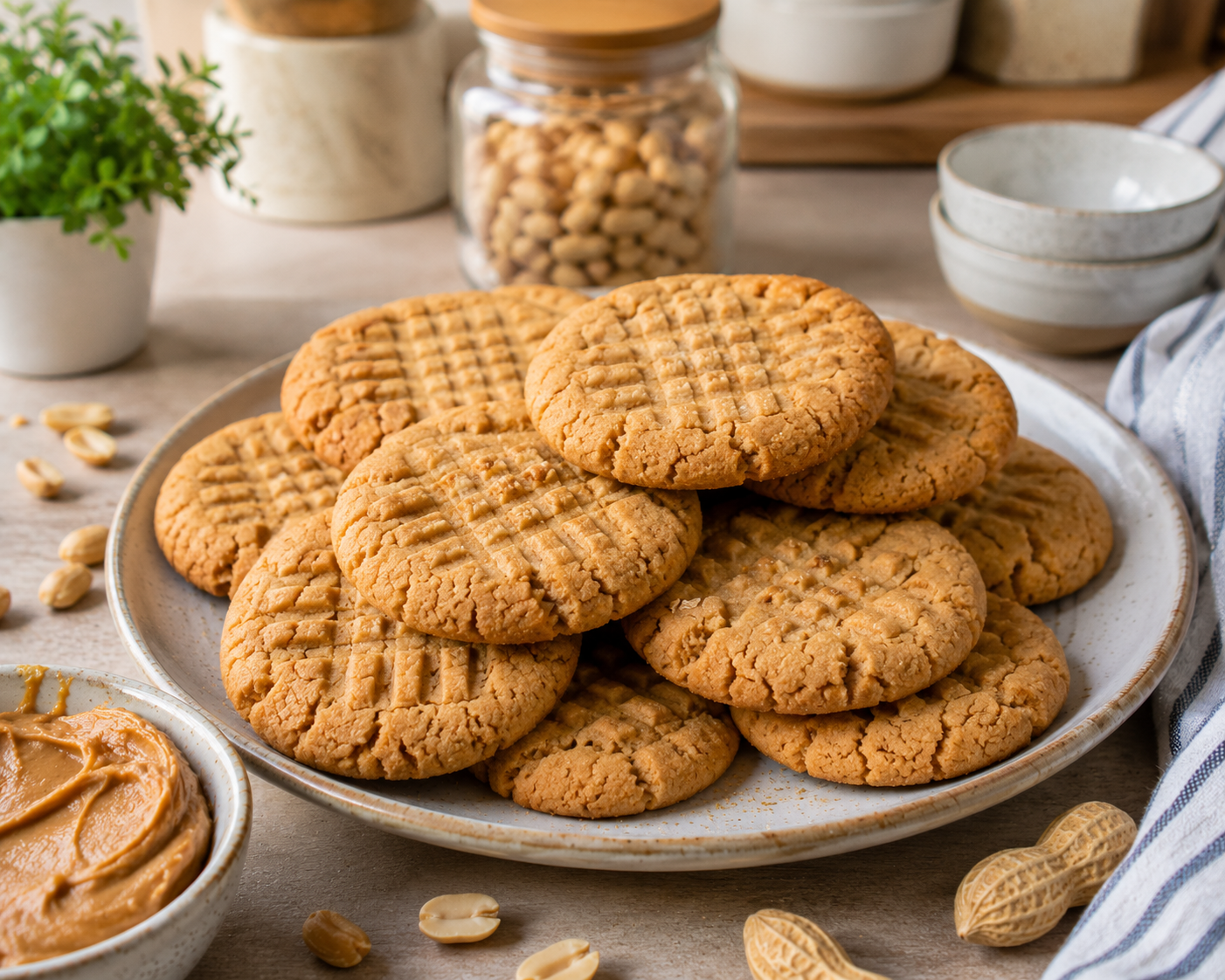
Gluten Free Peanut Butter Cookie
Soft, chewy, and naturally rich in peanut butter flavor, these homemade gluten-free peanut butter cookies have lightly crisp edges and traditional crisscross tops
18
servings15
minutes20
minutes215
kcal10
minutes5
minutes50
minutesIngredients
- For the Cookie Dough
1 cup creamy peanut butter
½ cup unsalted butter, softened
¾ cup brown sugar
¼ cup granulated sugar
1 large egg
1 teaspoon vanilla extract
1½ cups gluten-free all-purpose flour
½ teaspoon baking soda
¼ teaspoon baking powder
¼ teaspoon salt
- Optional Toppings
Extra granulated sugar for rolling
Flaky sea salt
Mini chocolate chips
Chopped roasted peanuts
Directions
- Preheat the oven to 350°F (175°C). Line two baking sheets with parchment paper and set them aside.
- Place the softened unsalted butter, brown sugar, and granulated sugar in a large mixing bowl. Beat with an electric mixer until the mixture looks light, smooth, and creamy.
- Add the creamy peanut butter and continue beating until it is evenly blended with the butter and sugars.
- Mix in the egg and vanilla extract. Continue beating until the wet mixture appears smooth and uniform.
- In a separate medium bowl, whisk together the gluten-free all-purpose flour, baking soda, baking powder, and salt.
- Gradually add the dry ingredients to the peanut butter mixture. Mix only until a soft cookie dough forms and no visible flour remains.
- Cover the bowl and refrigerate the dough for 20 minutes. This helps the cookies retain their shape and prevents excessive spreading.
- Scoop approximately 2 tablespoons of dough for each cookie and roll it into a smooth ball.
- Roll the dough balls in extra granulated sugar, if desired, and arrange them on the prepared baking sheets with enough space between each cookie.
- Use a fork to press each dough ball gently in one direction. Turn the fork and press again to create a traditional crisscross pattern.
- Add flaky sea salt, mini chocolate chips, or chopped roasted peanuts if using.
- Bake for 10–12 minutes, or until the edges are lightly golden and the centers still look slightly soft.
- Remove the baking sheets from the oven and let the cookies cool on the trays for 5 minutes.
- Carefully transfer the cookies to a wire cooling rack and allow them to cool completely before storing or serving.
Nutrition Facts
18 servings per container
- Amount Per ServingCalories215
- % Daily Value *
- Total Fat
13g
17%
- Total Carbohydrate
22g
8%
- Protein 4g 8%
* The % Daily Value tells you how much a nutrient in a serving of food contributes to a daily diet. 2,000 calories a day is used for general nutrition advice.