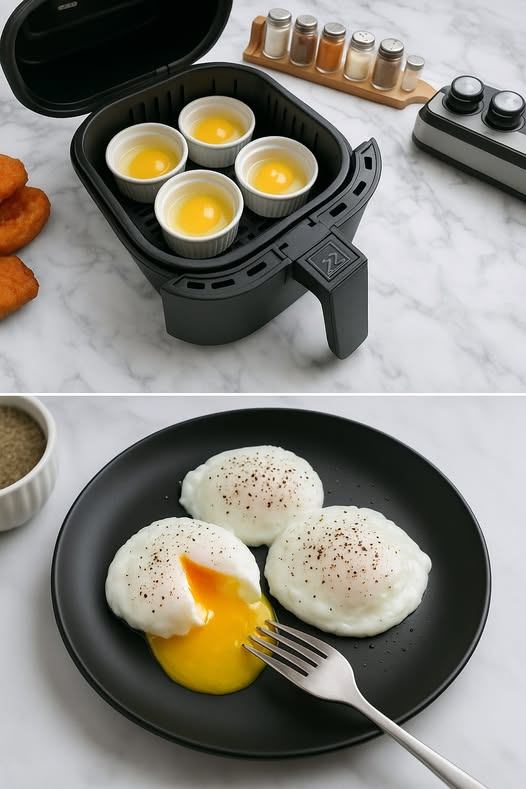
Poached eggs have always been one of my favorite breakfast choices because they are light, satisfying, and incredibly versatile. Before I started using an air fryer, I always thought poached eggs required special cooking skills. Traditional methods often involve simmering water, adding vinegar, and carefully swirling the water before dropping in the egg. While that method works, it can be tricky, especially when making more than one egg at a time.
Now, I prepare poached eggs in my air fryer whenever I want a quick breakfast or brunch. This method takes away the guesswork while still giving me soft egg whites and beautifully runny yolks. Instead of watching a pot on the stove, I simply prepare the ramekins, place them in the air fryer, and let it do the work.
One of the best things about this recipe is how easy it is for beginners. Even if you’ve never made poached eggs before, this method is straightforward and reliable. The ingredients are minimal, the preparation is simple, and cleanup is easy too.
Whether I’m serving them on toast, alongside fresh vegetables, or as part of a hearty breakfast plate, these air fryer poached eggs always turn out delicious.
Why I Love Making Poached Eggs in the Air Fryer
There are plenty of reasons why this has become one of my favorite breakfast recipes. Once I discovered this technique, I rarely went back to the traditional stovetop method.
Easy for Anyone to Make
The air fryer removes much of the stress that usually comes with poaching eggs. There is no need to worry about swirling boiling water or getting the timing exactly right. Everything cooks neatly inside the ramekins.
Consistent Results
I appreciate how predictable the results are. The eggs cook evenly, and I can easily adjust the cooking time depending on whether I prefer a softer or slightly firmer yolk.
Perfect for Busy Mornings
Breakfast doesn’t need to be complicated. Since the air fryer handles most of the cooking, I can prepare other parts of the meal while the eggs cook.
Great for Small or Large Breakfasts
If I’m cooking for myself, I simply prepare one or two eggs. When family joins me for breakfast, I can cook several eggs at once without standing over the stove.
Ingredients
- Olive oil spray or avocado oil spray
- 2 large eggs
- Salt and pepper to taste
These simple ingredients are all that’s needed to create soft and delicious poached eggs.
Kitchen Equipment
Having the right tools makes this recipe much easier.
I use:
- Air fryer
- Two 4-ounce ramekins
- Small teaspoon or mini spatula
- Small strainer
- Mini oven mitts
The ramekins help hold the eggs and water together while they cook, giving the eggs their classic poached shape.
Helpful Ingredient Tips
Although this recipe is simple, a few small adjustments can make preparation even easier.
Cooking Spray
If I don’t have cooking spray available, I lightly coat each ramekin with a little oil using a paper towel. This helps prevent the eggs from sticking.
Seasoning
Salt and pepper are enough for a classic flavor, but they’re always added after cooking so the eggs stay fresh and delicate.
Egg Size
This recipe uses large eggs. Smaller eggs may cook a little faster, so it’s always worth checking them a minute earlier.
Preparing the Air Fryer
Before adding the eggs, I always preheat the air fryer. This helps create an even cooking temperature from the beginning.
While the air fryer heats, I lightly spray the ramekins with oil. This small step makes removing the cooked eggs much easier later.
Next, I pour room-temperature water into each ramekin before gently cracking one egg into each cup. I try to crack the eggs carefully so the yolks stay whole.
Using room-temperature water has always worked well for me, and I haven’t found any benefit in boiling the water beforehand.
Cooking the Eggs
Once everything is ready, I carefully place the ramekins inside the air fryer basket.
At this stage, the cooking process is mostly hands-off.
As the eggs cook, the hot circulating air gently firms the whites while keeping the yolks wonderfully soft.
After the first cooking time, I carefully open the air fryer and gently run a small teaspoon around the edge of each ramekin. This helps loosen the egg without breaking it.
If the whites need a little more time to set, I simply return the ramekins to the air fryer for another minute or two.
This extra step allows me to control the texture exactly the way I like it.
Small Tips That Make a Big Difference
After making this recipe several times, I’ve discovered a few simple habits that always improve the results.
Use Room-Temperature Water
There’s no need to heat the water first. It saves time, and the eggs still cook beautifully.
Handle the Eggs Gently
Cracking each egg carefully helps keep the yolk whole throughout cooking.
Don’t Rush
Although the recipe cooks quickly, giving the eggs an extra minute when needed helps the whites fully set without overcooking the yolk.
Check the Eggs Carefully
Every air fryer cooks slightly differently, so I always keep an eye on the eggs near the end of the cooking time.
These small adjustments make it easy to achieve perfectly poached eggs every time.
Why This Recipe Works So Well
This cooking method combines convenience with excellent results. The air fryer creates gentle heat that cooks the eggs evenly while the water inside the ramekins keeps the texture soft and tender.
Instead of worrying about boiling water or complicated techniques, I simply prepare the ramekins, let the air fryer work, and enjoy perfectly cooked poached eggs in just a few minutes.
It’s one of those recipes that looks impressive but is surprisingly easy to prepare, making it ideal for both everyday breakfasts and relaxed weekend brunches.
Finishing and Serving Air Fryer Poached Eggs
Once the eggs have finished cooking, I carefully remove the ramekins from the air fryer using oven mitts because they become very hot. This step only takes a minute, but it’s important to handle everything carefully to avoid spilling the hot water.
I gently slide a small teaspoon around the edge of each ramekin to loosen the egg. This helps the egg come out without breaking the delicate white or the soft yolk.
Next, I carefully pour the egg into a small strainer. The extra water drains away quickly, leaving behind a perfectly shaped poached egg that is ready to serve.
Before serving, I simply season the eggs with salt and pepper. These basic seasonings are enough to bring out the rich flavor of the egg while keeping the recipe simple and fresh.
Tips for Perfect Results Every Time
After making this recipe many times at home, I have learned a few simple tricks that make a noticeable difference.
Do Not Overcrowd the Air Fryer
If I am preparing several eggs, I make sure there is enough room for the ramekins. Proper air circulation allows each egg to cook evenly.
Adjust the Cooking Time
Every air fryer cooks a little differently. Some models cook faster, while others may need an extra minute or two.
Instead of relying only on the timer, I always check the eggs near the end of cooking. If the whites are set but the yolk is still soft, they are ready.
Remove the Eggs Slightly Early
The eggs continue cooking for a short time after they are removed from the air fryer because they remain in the hot water.
Taking them out just before they seem completely done helps prevent overcooking.
Keep the Egg Covered with Water
The water inside the ramekin helps cook the egg gently. If the egg isn’t fully surrounded by water, the exposed white may become slightly firm or dry.
Common Mistakes to Avoid
Although this recipe is easy, avoiding a few common mistakes helps produce the best results.
Skipping the Oil
Lightly greasing the ramekins prevents the eggs from sticking and makes cleanup much easier.
Breaking the Yolk
Crack each egg gently into the ramekin to keep the yolk intact.
Using the Wrong Size Ramekin
Small ramekins work best because they help the egg maintain its shape during cooking.
Ignoring Air Fryer Differences
Cooking times can vary depending on the air fryer model, egg size, and even the starting temperature of the eggs.
Always use the recommended cooking time as a guide instead of an exact rule.
Serving Ideas
One reason I enjoy making poached eggs so often is because they pair well with many different meals.
Some of my favorite serving ideas include:
- Freshly toasted bread
- Creamy avocado toast
- Crispy bacon
- Sautéed spinach
- Roasted cherry tomatoes
- Steamed broccoli
- Roasted Brussels sprouts
- Cooked salmon
These simple combinations create a balanced breakfast, brunch, or even a light lunch.
Sometimes I also place a poached egg on top of a bowl of vegetables. As the yolk breaks, it creates a rich, creamy sauce that adds extra flavor to the entire meal.
Storing Leftover Poached Eggs
Freshly cooked poached eggs always have the best texture, but they can also be prepared ahead if needed.
If I know I’ll be serving breakfast later, I immediately transfer the cooked eggs into a bowl of ice water. This quickly stops the cooking process and helps maintain the soft yolk.
Once cooled, I place the eggs in an airtight container filled with water and refrigerate them.
They stay fresh for up to three days.
Reheating Instructions
Reheating poached eggs is surprisingly simple.
My preferred methods are:
Boiling Water
Place the egg in hot water for a short time until warmed through.
Microwave
Warm the egg gently for a few seconds until heated.
Both methods work well, but I avoid overheating because the yolk can become firm very quickly.
Frequently Asked Questions
Can I Really Poach Eggs in an Air Fryer?
Yes. Using ramekins filled with water allows the eggs to cook gently while the air fryer circulates hot air around them.
The result is a soft poached egg without using the traditional stovetop method.
Should I Use Hot Water?
I usually use room-temperature water because it saves time and still produces excellent results.
Heating the water first is optional but not necessary.
Is Vinegar Needed?
No.
Unlike traditional poaching methods, vinegar is not required for this recipe.
The ramekins help the egg keep its shape naturally.
How Many Eggs Can I Cook?
Most standard air fryers can hold several ramekins at once.
Just make sure they are arranged with enough space around them so the hot air can circulate properly.
Can Silicone Egg Cups Be Used?
Ceramic ramekins usually provide more consistent cooking results.
They retain heat well and help the eggs cook evenly.
Helpful Cooking Notes
Several small factors can affect the final cooking time.
These include:
- Egg size
- Refrigerator-cold or room-temperature eggs
- Ramekin material
- Ramekin size
- Number of eggs being cooked
- Air fryer size
- Air fryer model
Because every kitchen setup is different, don’t hesitate to adjust the cooking time slightly after your first batch.
Testing one or two eggs first is a great way to learn how your own air fryer performs.
Why This Recipe Has Become One of My Favorites
I enjoy recipes that save time without sacrificing quality, and this one does exactly that.
Instead of standing over a pot of simmering water, I simply prepare the ramekins, place them in the air fryer, and let everything cook.
The eggs come out soft, tender, and full of flavor with very little effort.
Whether I am making a quick weekday breakfast or preparing brunch for family, this recipe delivers consistent results every time.
If you have never tried making poached eggs in an air fryer before, this method is an easy place to start. With just a few simple ingredients and a little practice, you can enjoy beautifully cooked poached eggs whenever you like.
Air Fryer Poached Eggs
 Recipe by admin1
If you’re looking for an easy way to make perfectly poached eggs without using the stovetop, this air fryer method is a great option. The eggs cook gently in water inside ramekins, giving you tender whites and soft, runny yolks with very little effort. This simple recipe is ideal for breakfast, brunch, or adding extra protein to your favorite meal.
2
servings5
minutes6
minutes103
kcalIngredients
Olive oil spray or avocado oil spray
2 large eggs
Salt and pepper to taste
Directions
- Preheat the Air Fryer
Preheat the air fryer to 400°F (204°C) for 5 minutes. Starting with a fully heated air fryer helps the eggs cook more evenly. - Prepare the Ramekins
Lightly coat each ramekin with olive oil spray or avocado oil spray.
Pour ¼ cup room-temperature water into each ramekin.
Carefully crack one large egg into each ramekin, making sure the yolk stays intact. - Cook the Eggs
Place the prepared ramekins into the preheated air fryer basket.
Cook at 360°F (182°C) for 5 minutes. - Loosen the Eggs
Open the air fryer carefully.
Using a small teaspoon or mini spatula, gently run around the inside edge of each ramekin to loosen the egg.
Return the ramekins to the air fryer and continue cooking for 1–2 more minutes, if needed, until the egg whites are set to your liking. - Drain and Serve
Carefully slide each egg into a small strainer to remove the excess water.
Transfer the eggs to a serving plate.
Season with salt and pepper before serving.
Helpful Notes
- This recipe uses refrigerated large eggs.
- Room-temperature water works well, so there is no need to pre-boil it.
- Vinegar is not required for this cooking method.
- Every air fryer cooks a little differently, so cooking times may need slight adjustments.
- Test one or two eggs first if using a new air fryer model.
- Avoid overcrowding the air fryer basket to allow proper airflow.
- Cooking time may vary depending on:
- Egg size
- Starting temperature of the eggs
- Ramekin size and material
- Number of eggs being cooked
- Air fryer model and basket size
Nutrition Facts
- Serving Size: 1 g
- Fat: 8g
- Saturated Fat: 2g
- Trans Fat: 0.02g
- Polyunsaturated Fat: 1g
- Monounsaturated Fat: 2g
- Cholesterol: 186mg
- Sodium: 73mg
- Potassium: 69mg
- Carbohydrates: 1g
- Sugar: 0.2g
- Protein: 6g
- Vitamin A: 270mcg
- Calcium: 28mg
- Iron: 1mg