Introduction
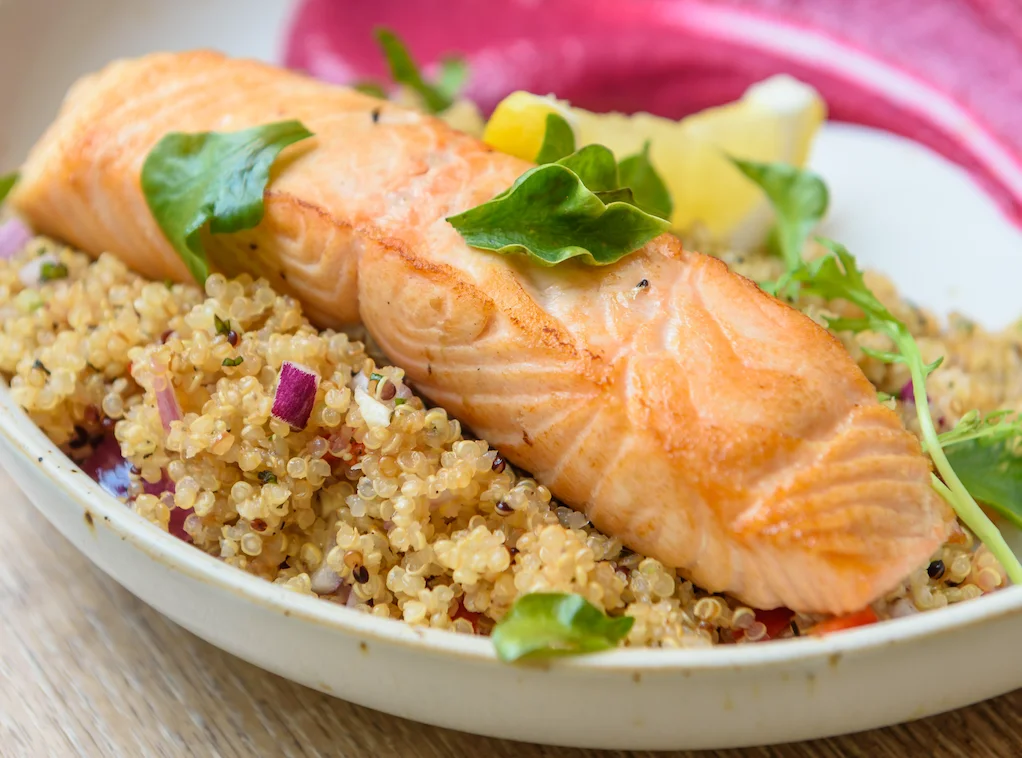
This dish combines tender, oven-baked salmon with a soft, mildly seasoned quinoa and vegetable mixture. Salmon is rich in protein and omega-3 fatty acids, which are beneficial for overall health and may help reduce inflammation. The quinoa is cooked until soft and paired with well-cooked vegetables to ensure it is easy on the digestive system.
During diverticulitis flare-ups, it is important to focus on low-fiber, easily digestible foods. This recipe modifies traditional quinoa dishes by cooking everything thoroughly and choosing vegetables that become soft and gentle when cooked.
Ingredients
For the Salmon
- 2 salmon fillets (fresh or thawed, skinless if preferred)
- 1 tablespoon olive oil
- 1 teaspoon lemon juice (optional, use lightly)
- 1/2 teaspoon salt
- 1/4 teaspoon black pepper
- 1/2 teaspoon dried oregano or thyme (optional, mild seasoning)
For the Vegetable Quinoa
- 1/2 cup quinoa (well rinsed)
- 1 cup water or low-sodium chicken/vegetable broth
- 1/2 cup finely chopped carrots (peeled)
- 1/2 cup zucchini (peeled and finely diced, seeds removed)
- 1/4 cup spinach (finely chopped, stems removed)
- 1 tablespoon olive oil or a small amount of butter
- 1/2 teaspoon salt (adjust to taste)
Important Preparation Notes for Diverticulitis
- Always rinse quinoa thoroughly to remove its natural coating, which can be irritating.
- Cook quinoa longer than usual so it becomes soft and easy to digest.
- Peel all vegetables and remove seeds to reduce fiber and irritation.
- Avoid strong spices, chili, garlic chunks, or onion pieces if you are in a sensitive phase.
- Ensure all components are soft, moist, and not dry or hard.
Step-by-Step Instructions
Step 1: Prepare the Quinoa
- Place the quinoa in a fine sieve and rinse it under running water for at least 1 to 2 minutes. This step is important to remove bitterness and make it gentler on digestion.
- In a medium saucepan, add the rinsed quinoa and water or broth.
- Bring it to a gentle boil over medium heat.
- Reduce the heat to low, cover, and let it simmer for about 15 minutes.
- Add the chopped carrots and zucchini to the pot halfway through cooking so they soften along with the quinoa.
- Continue cooking until the quinoa is very soft and the liquid is fully absorbed. If needed, add a little extra water to ensure a softer texture.
- Once cooked, stir in the finely chopped spinach and olive oil or butter. Let it sit covered for 5 minutes so the spinach wilts completely.
- Gently fluff the mixture with a fork, but keep it moist and soft rather than dry.
Step 2: Prepare the Salmon
- Preheat your oven to 180 degrees Celsius (350 degrees Fahrenheit).
- Lightly grease a baking dish or line it with parchment paper.
- Place the salmon fillets in the dish.
- Drizzle olive oil over the fillets and gently rub it in.
- Season with salt and a small amount of black pepper.
- Add a few drops of lemon juice if tolerated, but keep it minimal to avoid acidity.
- Sprinkle mild herbs like oregano or thyme if desired.
Step 3: Bake the Salmon
- Place the salmon in the preheated oven.
- Bake for about 12 to 15 minutes, depending on the thickness of the fillets.
- The salmon should become opaque and flake easily with a fork when done.
- Avoid overcooking, as dry fish can be harder to digest.
Step 4: Assemble the Dish
- Spoon a portion of the soft vegetable quinoa onto a plate.
- Place a baked salmon fillet on top or alongside the quinoa.
- If needed, drizzle a small amount of olive oil over the dish for added moisture.
Texture and Serving Tips
- The quinoa should be soft, slightly creamy, and not grainy.
- Vegetables should be fully cooked and easy to mash with a fork.
- The salmon should be moist and flaky, not dry or crispy.
Variations and Adjustments
During a Flare-Up
- Reduce the quinoa portion and focus more on soft salmon.
- Strain or mash the vegetables further for a smoother texture.
- Avoid lemon juice completely if acidity causes discomfort.
During Recovery
- Gradually increase the amount of vegetables.
- Add small amounts of very soft, peeled vegetables like pumpkin or potatoes.
Storage Instructions
- Store leftovers in an airtight container in the refrigerator for up to 2 days.
- Reheat gently on the stove or in the microwave with a splash of water or broth to maintain moisture.
- Avoid reheating multiple times, as this can affect texture and digestibility.
Nutritional Benefits
- Salmon provides high-quality protein and healthy fats that support healing.
- Quinoa offers gentle carbohydrates when cooked thoroughly.
- Soft vegetables supply vitamins while remaining easy on the digestive system.