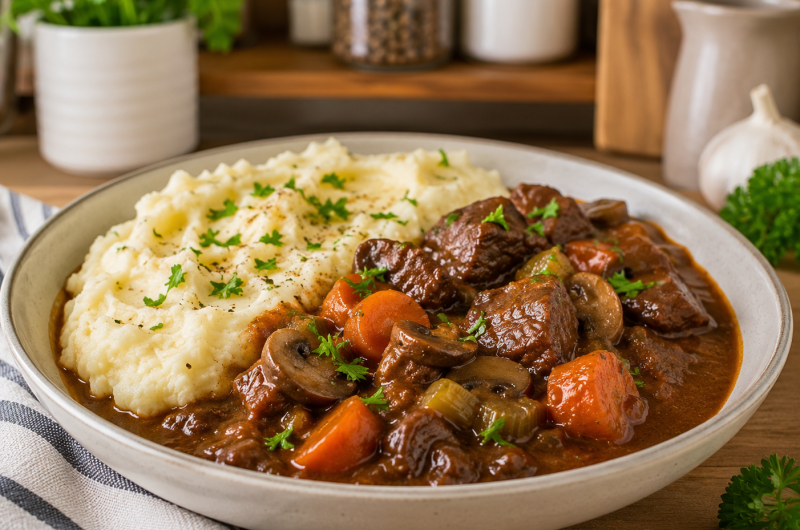
Beef Stew with Mashed Potatoes is a rich and satisfying comfort food recipe made with tender beef chuck, hearty vegetables, mushrooms, fragrant herbs, and a thick savory gravy. The finished stew is served over smooth mashed potatoes prepared with butter, warm milk, and heavy cream. This combination creates a complete family dinner that feels especially comforting during autumn and winter. Although the recipe requires several hours, most of that time is gentle simmering, allowing the beef to become tender while the broth develops a deeper and more concentrated flavor.
Why This Homemade Beef Stew Recipe Works
A memorable beef stew depends on much more than placing meat and vegetables in a pot. The beef must be seasoned, lightly coated with flour, and browned before the liquid is added. The vegetables need time to soften and release their natural sweetness, while the tomato paste should cook briefly to deepen its flavor. Slow simmering then brings every component together. When these steps are followed carefully, the result is a thick beef stew with gravy, tender vegetables, and succulent meat that separates easily with a fork.
A Complete Comforting Meal in One Bowl
Serving beef stew with mashed potatoes creates a complete and filling dinner without requiring complicated side dishes. The potatoes provide a soft, buttery base that absorbs the savory gravy, while the beef and vegetables contribute texture and substance. Every spoonful contains creamy potatoes, tender meat, mushrooms, carrots, celery, onions, and deeply seasoned broth. This makes the recipe suitable for Sunday dinner, family gatherings, cold-weather meals, holiday weekends, or any occasion when a warm homemade dish feels particularly welcome.
Choosing Beef Chuck for Slow-Cooked Stew
Beef chuck is the preferred cut for this recipe because it contains marbling and connective tissue that respond well to long, slow cooking. As the meat simmers, the connective tissue gradually breaks down and turns into gelatin, helping the beef become tender while enriching the gravy. Leaner cuts may seem appealing, but they often become firm or dry after several hours. Cubes measuring approximately one and a half inches are large enough to remain juicy while still cooking evenly within the suggested time.
Why Uniform Beef Cubes Are Important
Cutting the beef into evenly sized pieces helps every portion cook at approximately the same rate. Small pieces may become dry before larger cubes are tender, while oversized chunks can remain tough after the vegetables have softened. Consistent one-and-a-half-inch cubes provide a reliable balance between browning and slow cooking. They also create attractive serving portions that remain visible in the finished stew rather than breaking apart completely during the long simmering period.
Preparing the Beef for Better Browning
Before seasoning, the beef should be patted thoroughly with paper towels. Surface moisture creates steam, and steaming prevents the meat from developing the dark brown crust needed for rich flavor. Once dry, the cubes are tossed with salt, black pepper, and all-purpose flour. The flour forms a light coating that supports browning and begins thickening the liquid later. Allowing the seasoned beef to rest briefly also helps the coating settle before the pieces are transferred to the hot pot.
The Importance of Browning Beef in Batches
Overcrowding the pot is one of the most common mistakes when preparing stew. If too many beef cubes are added at once, the temperature drops and moisture collects around the meat. Instead of browning, the beef begins to simmer in its own juices. Cooking in batches gives every cube enough contact with the hot surface to form a deep golden crust. That caramelized exterior improves both the appearance of the beef and the overall flavor of the completed stew.
Building Flavor from the Browned Pot
After the beef is removed, flavorful browned bits remain attached to the bottom of the Dutch oven or heavy pot. These caramelized pieces are sometimes called fond, and they contain concentrated flavor from the beef and flour coating. They should not be discarded or allowed to burn. As the onions, carrots, and celery cook, their moisture begins loosening some of those bits. Later, a small amount of stock is used to release the remainder and return that flavor to the stew.
How Carrots, Celery, and Onion Shape the Stew
Carrots, celery, and onion form the aromatic vegetable foundation of this classic beef stew. Onion brings natural sweetness and depth, carrots add mild earthy sweetness and color, and celery contributes a fresh savory flavor. Cooking them for several minutes before adding the liquid softens their texture and encourages their flavors to develop. This preparation produces a more complex stew than simply boiling raw vegetables in broth from the beginning.
Adding Garlic and Mushrooms at the Right Time
Garlic and mushrooms are added after the first vegetables have begun to soften. Garlic cooks quickly and can become bitter if exposed to high heat for too long, so adding it later protects its flavor. Mushrooms release moisture as they cook, then absorb the surrounding seasonings and broth. Their earthy taste works naturally with beef, thyme, rosemary, and Worcestershire sauce. Halving the mushrooms allows them to remain noticeable rather than disappearing into the gravy.
Tomato Paste Adds Concentrated Richness
Tomato paste contributes color, mild acidity, and concentrated savory flavor. Cooking it in the pot for about two minutes before adding the stock removes its raw taste and allows its natural sugars to caramelize slightly. This small step gives the final gravy greater depth without turning the dish into a tomato-based stew. The amount is carefully balanced so that it supports the beef and herbs rather than dominating the finished flavor.
Deglazing the Pot for Maximum Flavor
Deglazing means adding liquid to a hot pot and scraping up the browned material stuck to the bottom. A small amount of beef stock is poured in after the vegetables and tomato paste have cooked. A wooden spoon can then be used to loosen every flavorful piece. This process prevents burning while incorporating the concentrated browned flavor into the stew base. Skipping it would leave one of the richest components of the recipe behind in the pot.
Creating a Rich Beef Stew Base
The stew liquid combines beef stock, beef broth, Worcestershire sauce, bay leaves, dried thyme, dried rosemary, and paprika. Beef stock provides body, while beef broth adds enough liquid for long simmering. Worcestershire sauce contributes savory depth and a slight tang that supports the browned beef. Thyme and rosemary supply traditional herbal notes, paprika adds warmth and color, and bay leaves slowly release fragrance while the stew cooks. Together, these ingredients produce a balanced gravy without overwhelming the vegetables or meat.
Why Slow Simmering Produces Tender Beef
Once all the ingredients are combined, the stew is brought briefly to a gentle boil and then reduced to low heat. A slow simmer is essential because high heat can tighten the meat fibers and cause the beef to become tough. Gentle cooking gives the collagen time to soften gradually while preventing the liquid from evaporating too quickly. After approximately two to two and a half hours, the beef should be fork-tender and the vegetables should have absorbed the savory broth.
Partially Covering the Pot
Partially covering the Dutch oven helps control moisture during cooking. A fully uncovered pot may lose too much liquid, while a tightly covered pot may prevent the broth from reducing enough to develop a rich flavor. Leaving a small opening allows some steam to escape while protecting the stew from drying out. The mixture should be stirred occasionally so that nothing sticks to the bottom and the ingredients continue cooking evenly.
Knowing When the Beef Is Ready
Cooking time is a useful guide, but tenderness is a more dependable test. A properly cooked piece of beef chuck should yield easily when pressed with a fork. If it remains chewy after two hours, it usually needs more time rather than higher heat. Continue simmering gently and test again after fifteen or twenty minutes. Beef chuck can pass through a tough stage before becoming tender, so patience is one of the most important parts of successful stew preparation.
Thickening the Beef Gravy
Although the flour coating on the beef provides some thickness, the finished stew is strengthened with a cornstarch slurry. Cornstarch must first be mixed with cold water until completely smooth. Adding dry cornstarch directly to the hot stew would create lumps. The slurry is poured slowly into the simmering liquid while stirring continuously. After five to ten minutes, the gravy becomes glossy and thick enough to coat the vegetables, beef, and back of a spoon.
Adjusting the Final Consistency
The stew should have a rich gravy rather than a watery broth, but it should still be easy to spoon over mashed potatoes. If it appears thinner than desired, allow it to simmer slightly longer after adding the cornstarch mixture. If it becomes too thick, a small amount of beef broth can restore the preferred consistency. Remove both bay leaves before serving, as they are intended only to flavor the liquid and should not be eaten.
Why Mashed Potatoes Are the Perfect Pairing
Creamy mashed potatoes are ideal with beef stew because their mild buttery flavor balances the intensely savory gravy. Their smooth texture contrasts with the firm vegetables and tender pieces of beef. When the stew is ladled over the potatoes, the gravy flows into every spoonful, connecting the two components into one cohesive dish. Yukon Gold potatoes produce a naturally creamy texture, while Russet potatoes create lighter and fluffier mashed potatoes. Either type works well in the recipe.
Cutting Potatoes into Even Pieces
The potatoes should be peeled and cut into similar-sized chunks before boiling. Uniform pieces cook evenly, preventing some potatoes from becoming waterlogged while others remain firm in the center. Beginning with cold water allows the temperature to rise gradually and helps the potatoes cook consistently from the outside inward. A generous pinch of salt seasons them during boiling, creating better flavor than adding all the salt only after mashing.
How to Know When Potatoes Are Cooked
The potatoes generally require fifteen to twenty minutes once the water begins boiling. They are ready when a fork or knife passes through the center without resistance. Undercooked potatoes create hard pieces that are difficult to mash smoothly, while overcooked potatoes may absorb excessive water. Checking several chunks is helpful because pieces near the surface may cook at a slightly different rate from those at the bottom of the pot.
Drying the Potatoes After Draining
After draining, the potatoes are returned to the warm pot for one to two minutes. This brief step allows remaining surface moisture to evaporate. Removing excess water is important because wet potatoes can create a thin or diluted mash. The pot should remain warm but not so hot that the potatoes begin sticking. Once they look dry and slightly steamy, they are ready to be mashed and combined with the dairy ingredients.
Creating Smooth and Creamy Mashed Potatoes
A potato masher produces a rustic texture, while a potato ricer creates a finer and smoother finish. The potatoes should be mashed before the butter, milk, and cream are fully incorporated. Warm milk blends more easily and prevents the potatoes from cooling too quickly. Butter adds richness, heavy cream provides a luxurious texture, and the measured salt and black pepper balance the flavor. Chopped chives may be stirred in at the end for freshness and color.
Avoiding Gluey Mashed Potatoes
Potatoes contain starch that can become sticky when worked too aggressively. Mixing with an electric blender or food processor may overdevelop that starch and create a glue-like texture. A hand masher or ricer is safer because it breaks down the potatoes without excessive agitation. Once the dairy ingredients are added, mix gently only until the mash looks smooth and creamy. Continuing to beat after that point can damage the texture.
Serving Beef Stew Over Mashed Potatoes
For an attractive presentation, spoon a generous portion of mashed potatoes into a wide bowl and form a shallow well in the center. Ladle the beef stew into the well and allow some gravy to flow around the potatoes. This arrangement keeps both components visible while ensuring they combine naturally as the meal is eaten. Fresh parsley, chopped chives, or freshly cracked black pepper can provide a simple finishing touch without changing the character of the dish.
A Reliable Make-Ahead Dinner
Beef stew is an excellent make-ahead meal because its flavor often becomes deeper after resting overnight. The stew can be cooked, cooled, and refrigerated in an airtight container. For the best mashed potato texture, store the potatoes separately from the stew. When reheating, warm the stew gradually over medium-low heat and stir occasionally. The potatoes can be refreshed with a little milk and butter to restore their original creaminess.
Notes
Brown the Meat Carefully
Take time to create a deep golden crust on the beef. The meat should be arranged in a single layer with space between the cubes. Turning each piece only after the first side has browned helps the crust develop properly. If the beef releases a large amount of liquid, the batch may be overcrowded or the pot may not be hot enough.
Maintain a Gentle Simmer
The surface of the stew should show small, occasional bubbles rather than vigorous boiling. Boiling aggressively can toughen the meat, break down the vegetables too quickly, and evaporate excessive liquid. If the mixture begins bubbling strongly, reduce the heat. Slow cooking is what turns beef chuck into tender, succulent pieces.
Use Warm Milk for the Potatoes
Warm milk and cream blend smoothly into freshly cooked potatoes. Cold dairy can lower the temperature quickly and may require extra mixing, which increases the risk of a sticky texture. The milk should be pleasantly warm rather than boiling. The butter can be softened or added directly to the hot potatoes so it melts evenly.
Season at Different Stages
The beef is seasoned before browning, the potato water is salted during boiling, and both the stew and mashed potatoes are tasted before serving. Layering seasoning in this way creates balanced flavor throughout the dish. Adding all the salt at the end may season only the surface while leaving the meat, vegetables, or potatoes tasting flat.
Remove the Bay Leaves
Bay leaves slowly flavor the stew but remain firm even after extended cooking. Locate and remove both leaves before serving. Their purpose is to season the gravy rather than become part of the finished meal. Counting the leaves when they are added makes it easier to confirm that both have been removed later.
Refrigerating Leftovers
Allow the stew to cool before transferring it to an airtight container. It can be refrigerated for up to four days. Store the mashed potatoes separately for up to three days. Separating them protects the texture of the potatoes and makes it easier to adjust the thickness of the stew when reheating.
Freezing the Stew
The beef stew can be frozen in a freezer-safe container for up to three months. Leave a small amount of space at the top because the liquid expands as it freezes. Thaw overnight in the refrigerator before reheating. Fresh mashed potatoes generally provide the best texture when serving a previously frozen batch of stew.
Reheating Without Drying
Reheat the stew slowly over medium-low heat, stirring from time to time. If the gravy has thickened excessively during storage, add a splash of beef broth. Warm the mashed potatoes gently with a small amount of milk and butter. Avoid high heat because it can cause the stew to stick and the mashed potatoes to become dry around the edges.
Why This Beef Stew with Mashed Potatoes Belongs in Your Recipe Collection
This homemade Beef Stew with Mashed Potatoes recipe brings together fork-tender beef chuck, hearty vegetables, mushrooms, aromatic herbs, rich gravy, and buttery potatoes in one deeply comforting meal. Every stage serves a purpose, from browning the meat and caramelizing the tomato paste to simmering slowly and drying the potatoes before mashing. The recipe takes time, but the techniques are straightforward and the result is generous enough to serve a family or group. It is a dependable cold-weather dinner, a practical make-ahead meal, and a timeless comfort food recipe worth preparing whenever a warm and satisfying dish is needed.
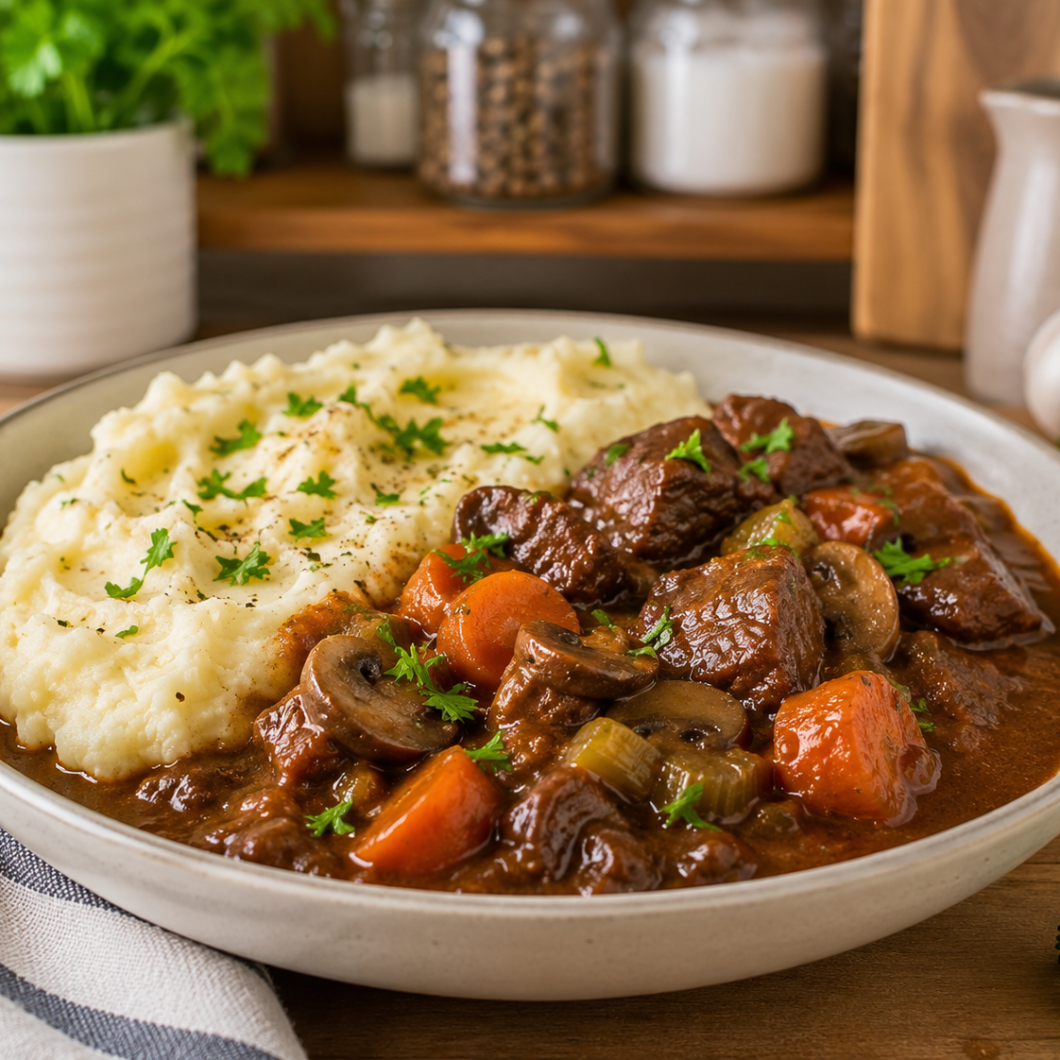
Beef Stew with Mashed Potatoes
A hearty homemade beef stew prepared with browned beef chuck, carrots, celery, onions, garlic, mushrooms, herbs, and a thick savory gravy. Served over buttery mashed potatoes made with warm milk and heavy cream, this classic comfort food dinner is ideal for family meals and cold-weather gatherings.
8
servings30
minutes2
hours30
minutes620
kcal3
hoursIngredients
- For the Beef Stew
2 lb beef chuck, cut into 1½-inch cubes
2 tsp salt
1 tsp black pepper
2 tbsp all-purpose flour
2 tbsp olive oil
2 large carrots, sliced
2 celery stalks, diced
1 large onion, diced
4 garlic cloves, minced
8 oz mushrooms, halved
1 tbsp tomato paste
4 cups beef stock
1 cup beef broth
1 tbsp Worcestershire sauce
2 bay leaves
1 tsp dried thyme
1 tsp dried rosemary
1 tsp paprika
2 tbsp cornstarch
3 tbsp cold water
- For the Mashed Potatoes
2½ lb Yukon Gold or Russet potatoes
6 tbsp unsalted butter
¾ cup warm milk
¼ cup heavy cream
1 tsp salt
½ tsp black pepper
2 tbsp chopped chives, optional
Directions
- Season the beef: Pat beef dry, then toss with salt, pepper, and flour.
- Brown the beef: Heat olive oil in a large pot over medium-high heat. Brown beef in batches for 3–4 minutes per side. Remove and set aside.
- Cook vegetables: Add carrots, celery, and onion to the same pot. Cook for 5 minutes. Add garlic and mushrooms and cook for 3 minutes.
- Add tomato paste: Stir in tomato paste and cook for 2 minutes.
- Deglaze: Add a small amount of beef stock and scrape the browned bits from the bottom.
- Simmer: Return beef to the pot. Add remaining stock, beef broth, Worcestershire sauce, bay leaves, thyme, rosemary, and paprika. Bring to a boil, reduce heat, partially cover, and simmer for 2–2½ hours until beef is tender.
- Thicken: Mix cornstarch with cold water. Stir into the stew and simmer for 5–10 minutes until thickened. Remove bay leaves.
- Cook potatoes: Peel and cut potatoes into chunks. Cover with cold salted water and boil for 15–20 minutes until tender.
- Mash potatoes: Drain well and return potatoes to the warm pot for 1–2 minutes. Mash with butter, warm milk, heavy cream, salt, and pepper. Stir in chives if using.
- Serve: Spoon mashed potatoes into bowls and ladle the hot beef stew and gravy over the top.
Nutrition Facts
8 servings per container
- Amount Per ServingCalories620
- % Daily Value *
- Total Fat
32g
42%
- Total Carbohydrate
48g
18%
- Protein 35g 70%
* The % Daily Value tells you how much a nutrient in a serving of food contributes to a daily diet. 2,000 calories a day is used for general nutrition advice.