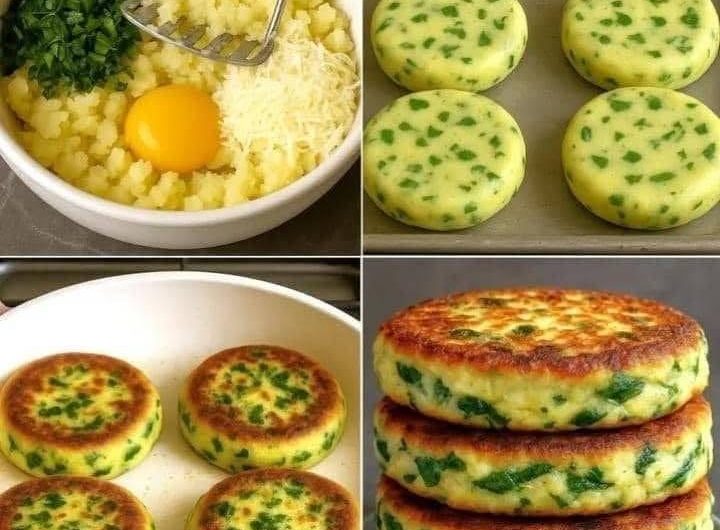
Leftover mashed potatoes have a way of sitting quietly in the refrigerator while everyone reaches for something else. Instead of reheating the same potatoes again, turning them into crispy, cheesy mashed potato pancakes gives them a completely different feel.
These pancakes are soft and savory in the middle, golden on the outside, and packed with cheese, green onions, bacon or ham, and simple seasonings. They can be served as a snack, side dish, appetizer, or an easy meal with a little sour cream on top.
The best part is that the mixture comes together in one bowl. There is no complicated preparation, and once the patties are shaped, they only need a few minutes in a skillet.
Why Leftover Mashed Potatoes Work So Well
Cold mashed potatoes can seem a little difficult to reuse because their texture changes after spending time in the refrigerator. Once they’re turned into pancakes, though, that texture becomes useful.
The mashed potatoes provide the base, while the other ingredients help create a mixture that can be shaped into patties and fried until golden.
A few simple additions make a big difference:
- Shredded cheese adds flavor and helps the pancakes hold together.
- Whole wheat flour absorbs extra moisture and gives the mixture enough structure.
- Eggs help bind everything together.
- Green onions bring a fresh, mild onion flavor.
- Bacon or ham adds a savory bite.
- Garlic powder, parsley, and thyme give the pancakes more depth.
- Vegetable oil helps create that golden fried exterior.
- Sour cream makes a creamy topping for serving.
Nothing complicated is needed. The idea is simply to take the mashed potatoes already in the refrigerator and give them a new purpose.
What Kind of Mashed Potatoes Should You Use?
The recipe works best with leftover mashed potatoes that aren’t overly runny. Plain mashed potatoes are ideal, although garlic mashed potatoes can also be used.
If the potatoes have been refrigerated, they will naturally be firm and clumpy. That’s not a problem, but they should be brought closer to room temperature before mixing.
If the Potatoes Are Cold
Take them out of the refrigerator and let them stand at room temperature for about 30 minutes.
This makes them easier to combine with the other ingredients.
Another option is to break up the chilled potatoes well with a warm potato masher before adding everything else. The goal is simply to get rid of large cold clumps so the final mixture is evenly combined.
The Cheese Makes These Pancakes Special
Cheese isn’t just there for flavor. It also contributes to the texture of the pancakes.
The recipe calls for 1 1/2 cups of shredded cheese, with a combination of cheddar and mozzarella suggested. Cheddar brings a stronger, familiar cheesy flavor, while mozzarella gives the pancakes a softer, stretchy quality.
Once the cheese is mixed into the mashed potatoes, it becomes part of the base rather than simply sitting on top.
This is one reason these pancakes feel completely different from a plain serving of leftover mashed potatoes.
Why Flour Is Added
The recipe uses 1/2 cup of whole wheat flour. A little flour helps absorb excess moisture from the mashed potatoes and other ingredients.
This is especially helpful when the mashed potatoes contain some moisture from milk, butter, or other ingredients used when they were originally prepared.
The flour gives the mixture enough structure to be shaped into patties without making the pancakes overly heavy.
It’s important to mix everything thoroughly so the flour is distributed throughout the potato mixture.
Eggs Help Hold Everything Together
Three eggs are included in the mixture. They help bind the mashed potatoes, cheese, flour, and other ingredients together.
Without enough structure, a potato mixture can be difficult to shape and may fall apart during frying. The eggs help create a cohesive mixture that can be formed into individual pancakes.
Once everything is stirred together properly, the mixture should be smooth and evenly combined.
Adding Flavor to the Potato Mixture
Mashed potatoes already have plenty of flavor, but the seasonings in this recipe give the pancakes their own character.
Garlic Powder
Garlic powder adds a savory garlic flavor throughout the mixture. Because it is a dry seasoning, it blends easily into the potatoes.
Dried Parsley
Dried parsley adds a mild herbal note. The recipe also allows for freshly chopped parsley if available.
Dried Thyme
A small amount of dried thyme is optional. It adds another layer of herbal flavor without taking over the dish.
Green Onions
Green onions provide a fresh contrast to the rich cheese and mashed potatoes. Some are mixed into the pancake mixture, while additional sliced green onions can be used as a garnish.
Bacon or Ham: Choose What’s Available
The recipe gives two options for the savory addition: crumbled cooked bacon OR chopped ham.
Either one works with the cheesy potato mixture.
Bacon adds a more pronounced smoky, salty flavor, while chopped ham gives the pancakes a softer, meaty bite.
This is also a useful way to make use of leftover cooked ham or bacon rather than letting it sit unused in the refrigerator.
Getting the Mixture Ready
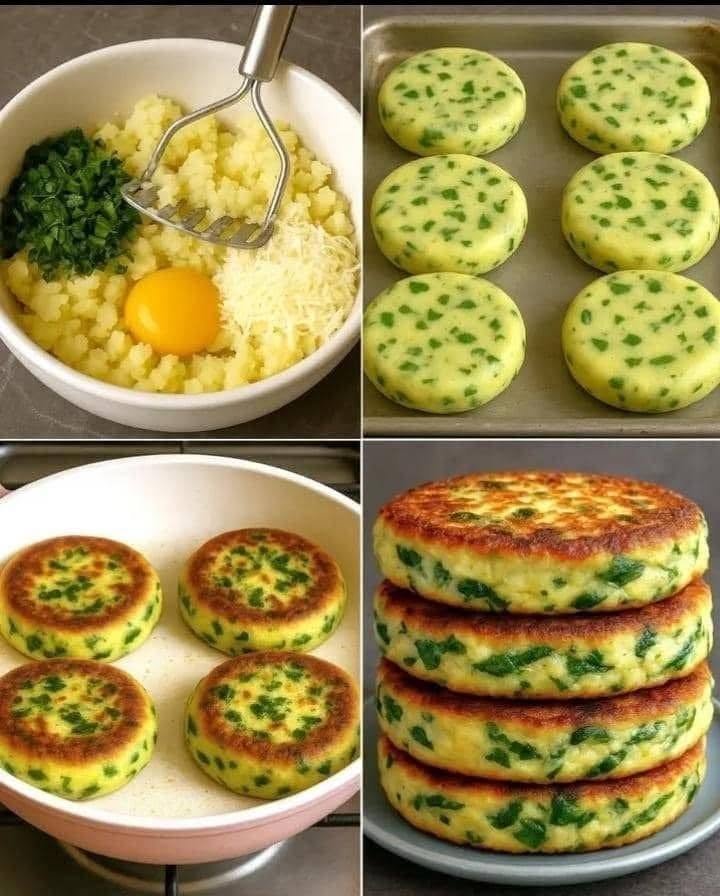
Start by placing the leftover mashed potatoes into a large bowl.
If they’re cold and firm, let them sit at room temperature for about 30 minutes or work them with a warm potato masher to break apart the clumps.
Once the potatoes are ready, add:
- Shredded cheese
- Whole wheat flour
- Chopped green onions
- Crumbled cooked bacon or chopped ham
- Eggs
- Garlic powder
- Dried parsley
- Optional dried thyme
- Salt and pepper
Stir everything together very well.
This is an important step. Every ingredient should be evenly distributed throughout the mashed potatoes so that each pancake has a good balance of cheese, seasoning, green onion, and bacon or ham.
The mixture should be cohesive enough to shape into patties.
Shaping the Potato Pancakes
The recipe makes 12 patties, each about 1.5 centimetres thick.
Try to keep the patties similar in size and thickness. This isn’t just for appearance; evenly shaped pancakes are easier to cook because they require roughly the same amount of time in the skillet.
A thickness of about 1.5 centimetres gives you a nice balance between a golden exterior and a soft, flavorful center.
Once the patties are formed, they’re ready for the skillet.
Getting the Skillet Ready
A large non-stick skillet works well for these potato pancakes.
Heat the skillet over medium heat, then add a small amount of vegetable oil—around 1 to 2 teaspoons.
You don’t need a large amount of oil. The goal is simply to give the pancakes enough fat to brown nicely without making them excessively greasy.
It’s also important not to overcrowd the pan. Fry the pancakes in batches so there is enough space around each one.
This allows the heat to circulate and makes it easier to turn the patties without breaking them.
The Goal: Golden and Crisp Outside
The pancakes should cook for approximately 5 minutes per side.
As they cook, the outside develops a golden-brown surface while the inside becomes hot and cheesy.
Don’t rush this step by turning the heat too high. Medium heat gives the pancakes time to warm through while the exterior develops that appealing golden color.
When they’re golden brown and completely cooked through, transfer them from the skillet and continue with the remaining patties.
The finished pancakes are best served warm.
A Simple Way to Serve Them
The easiest topping is sour cream. A spoonful on top adds a cool, creamy contrast to the warm, crispy potato pancake.
For an attractive finish, add:
- A dollop of sour cream
- Extra sliced green onions
- A little extra cheese, if desired
These simple toppings make the pancakes feel like a complete dish rather than just reheated leftovers.
The recipe can work in several different situations, too. Serve the pancakes as a side dish alongside a meal, arrange them on a platter as an appetizer, or pair them with a salad or steamed vegetables for a simple meal.
Frying the Pancakes the Right Way
Once all 12 potato patties have been shaped, the cooking part is quite simple. The main thing to remember is to give each pancake enough room in the skillet and enough time to develop a golden crust.
Heat a large non-stick skillet over medium heat and add a small amount of vegetable oil, around 1–2 teaspoons.
When the skillet is hot, carefully place the potato patties into the pan.
Don’t Overcrowd the Skillet
It may be tempting to fit all the pancakes into the skillet at once, especially when you’re trying to finish quickly. It’s better to cook them in batches.
Leaving some space between the patties makes them easier to flip and helps them brown more evenly.
If the pan is overcrowded:
- The pancakes can be difficult to turn.
- They may not brown evenly.
- The skillet temperature can drop.
- The patties can become softer instead of developing a nice golden outside.
A little patience here makes a noticeable difference.
How Long Should Mashed Potato Pancakes Cook?
Cook the pancakes for about 5 minutes on the first side.
You don’t need to constantly move them around. Let them sit in the skillet so the bottom has enough time to develop a golden-brown crust.
When the first side is nicely browned, carefully turn each pancake over.
Cook the second side for another 5 minutes, or until golden brown and completely cooked through.
The exact time can vary slightly depending on the size and thickness of the patties and how hot your skillet is, so use the color and texture as your guide.
What You’re Looking For
The finished pancakes should have:
- A golden-brown exterior
- A warm, soft center
- Melted cheese throughout
- A firm enough surface to hold its shape
- Lightly crisp edges
The contrast between the browned outside and soft potato center is what makes these pancakes so satisfying.
Don’t Turn Up the Heat Too Much
Medium heat is the best choice for this recipe.
A very hot skillet may brown the outside too quickly while leaving the center insufficiently heated. Since the pancakes contain mashed potatoes, cheese, eggs, and other ingredients, they need enough time to heat through.
If the pancakes are becoming dark very quickly, lower the heat slightly and allow them to continue cooking.
The goal isn’t simply to make the outside brown. You want the entire pancake heated through while keeping the outside pleasantly golden.
Serving the Pancakes While They’re Warm
These mashed potato pancakes are best served warm, straight from the skillet.
The cheese is at its most enjoyable when warm, and the outside has its best texture shortly after cooking.
A simple serving combination is all you really need:
Warm potato pancake + sour cream + green onions.
The creamy sour cream balances the crispy edges, while the green onions add a fresh flavor.
If desired, a little extra cheese can also be added on top.
They Work for More Than One Meal
One reason these pancakes are so useful is that they can fit into different parts of the day.
As a Side Dish
Serve them alongside a main meal instead of regular mashed potatoes.
They pair particularly well with simple vegetables or a salad.
As an Appetizer
Make the pancakes part of a snack or appetizer spread. A bowl of sour cream on the side makes it easy for everyone to add as much as they like.
As an Easy Meal
A few potato pancakes served with a side salad or steamed vegetables can make a simple and satisfying meal.
This is especially handy when the refrigerator already contains leftover mashed potatoes and you need a new way to serve them.
How to Keep the Pancakes Together
The combination of mashed potatoes, cheese, flour, and eggs provides the structure needed for these pancakes.
There are a few things that can make shaping easier.
Use Room-Temperature Potatoes
Very cold mashed potatoes tend to be stiff and clumpy. Letting them sit at room temperature for about 30 minutes makes them much easier to work with.
Mix Thoroughly
Make sure the eggs, flour, cheese, and seasonings are distributed throughout the potatoes.
An unevenly mixed batter can result in some pancakes having too much flour while others don’t have enough ingredients to hold together properly.
Keep the Patties Even
Try to make all 12 pancakes approximately the same thickness.
The recipe recommends about 1.5 centimetres, which gives them enough thickness for a soft center while allowing the outside to brown nicely.
What to Do If Your Mashed Potatoes Are Already Seasoned
Leftover mashed potatoes can vary depending on how they were originally prepared.
Some may be very lightly seasoned, while others may already contain plenty of salt, garlic, or other flavors.
This is why the recipe calls for salt and pepper to taste.
Before adding a large amount of additional seasoning, consider how the leftover potatoes already taste. The cheese, bacon or ham, and seasonings will add more flavor as well.
A small amount of salt is suggested in the recipe, but the final amount should suit the potatoes you’re starting with.
Bacon or Ham: Two Easy Options
The recipe gives you a choice between crumbled cooked bacon and chopped ham.
Both options work well, but they give slightly different results.
With Bacon
Bacon brings a savory and smoky flavor to the pancakes. The small pieces are spread throughout the potato mixture, so you get a little bacon in many bites.
With Ham
Ham provides a milder savory flavor and works particularly well when you already have leftover ham available.
There’s no need to make the recipe more complicated. Simply use whichever option is called for or whichever one you already have available.
Fresh or Dried Parsley?
The recipe uses 1 teaspoon dried parsley, with the option to use 2 teaspoons freshly chopped parsley instead.
Both are suitable.
Dried parsley is convenient because it can be mixed directly into the potato mixture along with the other seasonings.
Fresh parsley gives a slightly fresher herbal character and works nicely when you already have some available.
The Optional Thyme
The recipe includes 1/4 teaspoon dried thyme, marked as optional.
If you enjoy the flavor of thyme, it adds another gentle herbal note to the pancakes. If you prefer to keep the flavor simpler, it can be left out as indicated in the recipe.
There is no need to compensate for it with another ingredient.
A Few Simple Things to Avoid
These pancakes are straightforward, but avoiding a few common problems will make the cooking process smoother.
Don’t Start With Very Cold, Hard Potatoes
Cold potatoes straight from the refrigerator can be difficult to mix. Let them stand for 30 minutes or break them up thoroughly with a warm potato masher.
Don’t Skip the Flour
The flour helps absorb excess moisture and gives the patties structure.
Don’t Pack the Patties Too Thick
The recipe calls for approximately 1.5-centimetre-thick patties. Keeping close to this thickness helps them cook evenly.
Don’t Crowd the Pan
Cook in batches when necessary. A little space makes flipping much easier.
Don’t Use Excessive Oil
Only a small amount of vegetable oil is needed for frying.
How to Store Leftover Potato Pancakes
If you have pancakes left after serving, allow them to cool before storing them.
Place them in an airtight container and keep them in the refrigerator.
The original recipe specifically recommends storing leftover pancakes in the fridge in an airtight container.
When you’re ready to eat them, reheat them until warm.
They make a convenient option when you want something quick without preparing the mixture again.
How to Freeze Mashed Potatoes for Later
If you regularly find yourself with leftover mashed potatoes, freezing them can make this recipe even more convenient.
The mashed potatoes can be stored in an airtight container or freezer bag until you’re ready to use them.
When you want to turn them into pancakes, allow the potatoes to come back to room temperature before preparing the mixture.
This gives you a simple way to save leftovers instead of throwing them away.
A Handy Leftover-Mashed-Potato Routine
The process can be as simple as this:
- Freeze leftover mashed potatoes in an airtight container or freezer bag.
- When you’re ready to use them, thaw them and bring them to room temperature.
- Break up any remaining clumps.
- Mix in the remaining recipe ingredients.
- Shape the mixture into 12 patties.
- Fry the pancakes in batches.
- Serve warm with sour cream.
It’s a practical way to turn leftovers into something that feels like a completely different meal.
Why These Pancakes Are So Flexible
The basic mixture already includes cheese, bacon or ham, green onions, and herbs, but the recipe is also presented as a flexible way to use up leftovers.
If you have other ingredients that need to be used, the original recipe suggests options such as diced red peppers, grated carrots, onions, leftover ham, and different spices.
The key is to keep the potato mixture balanced enough to form patties.
The recipe also mentions that spices can change the character of the pancakes. For example, a little cayenne can bring heat, while taco seasoning can give them a different flavor direction.
These ideas make the recipe useful beyond one specific meal.
Making the Pancakes Your Own
The beauty of leftover recipes is that they don’t have to feel exactly the same every time.
The basic preparation stays the same:
Mashed potatoes → cheese → flour → eggs → flavorings → shape → fry.
From there, the toppings and additional flavors can change depending on what you have available.
For a simple serving, stick with sour cream and green onions.
For a heartier option, serve them with a side salad or steamed vegetables.
For a snack, keep the pancakes warm and serve sour cream alongside them for dipping.
Frequently Asked Questions
Can I use garlic mashed potatoes?
Yes. The recipe notes that plain mashed potatoes are best, but garlic mashed potatoes also work.
If the potatoes are already strongly seasoned, simply keep that in mind when adding the garlic powder, salt, and pepper.
How many pancakes does this recipe make?
The mixture is shaped into 12 patties, each approximately 1.5 centimetres thick.
Can I use ham instead of bacon?
Yes. The recipe specifically gives crumbled cooked bacon OR chopped ham as the options.
Can I use fresh parsley?
Yes. The recipe provides the option of using 2 teaspoons freshly chopped parsley instead of 1 teaspoon dried parsley.
What should I serve with mashed potato pancakes?
Sour cream is the suggested topping. Additional sliced green onions and extra cheese can also be added.
For a fuller meal, serve the pancakes with a side salad or steamed vegetables.
Can leftover mashed potatoes be frozen?
Yes. Store them in an airtight container or freezer bag and bring them to room temperature before using them to make the pancakes.
Conclusion
Cheesy Mashed Potato Pancakes are a practical way to give leftover mashed potatoes a completely new purpose. Instead of serving the same leftovers again, the potatoes become golden patties filled with cheese, green onions, bacon or ham, and simple herbs and seasonings.
The preparation is uncomplicated. Bring the mashed potatoes to room temperature, mix everything together, shape the mixture into 12 patties, and fry them until golden brown.
The result is a comforting dish with a crisp, browned outside and a soft, cheesy center.
Serve the pancakes warm with sour cream, extra green onions, and cheese if desired. They can work as an appetizer, side dish, snack, or simple meal with salad or steamed vegetables.
And when there are still mashed potatoes left after the meal, this recipe gives them another chance to become something everyone looks forward to eating.
Quick Reminder Before Cooking
- Bring the mashed potatoes to room temperature.
- Mix all the ingredients thoroughly.
- Shape 12 patties, about 1.5 centimetres thick.
- Heat the skillet over medium heat.
- Use only a small amount of vegetable oil.
- Cook for about 5 minutes per side.
- Don’t overcrowd the skillet.
- Serve warm with sour cream.
- Refrigerate leftover pancakes in an airtight container.
- Freeze leftover mashed potatoes for future batches.
Cheesy Mashed Potato Pancakes
These Cheesy Mashed Potato Pancakes are an easy way to turn leftover mashed potatoes into a golden, cheesy snack, side dish, or simple meal. Made with cheese, bacon or ham, green onions, eggs, and herbs, they are fried until golden and served warm with sour cream.
12
servings15
minutes15
minutesIngredients
3 cups leftover mashed potatoes
1 1/2 cups shredded cheese
1/2 cup whole wheat flour
1/3 cup chopped green onions, plus more for garnish
1/3 cup crumbled cooked bacon OR chopped ham
3 eggs
1 1/2 teaspoons garlic powder
1 teaspoon dried parsley, or 2 teaspoons freshly chopped parsley
1/4 teaspoon dried thyme, optional
Salt and pepper to taste
Small amount of vegetable oil for frying
Sour cream for serving
Directions
- Let the mashed potatoes stand at room temperature for about 30 minutes, or mash them well to remove cold clumps.
- Add the cheese, flour, green onions, bacon or ham, eggs, garlic powder, parsley, thyme, salt, and pepper.
- Stir thoroughly until the mixture is evenly combined and smooth.
- Shape the mixture into 12 patties, approximately 1.5 centimetres thick.
- Heat a large non-stick skillet over medium heat and add about 1–2 teaspoons vegetable oil.
- Fry the pancakes in batches without overcrowding the skillet.
- Cook for approximately 5 minutes per side, or until golden brown and completely cooked through.
- Serve warm with sour cream, extra green onions, and additional cheese if desired.
Notes
- Use room-temperature mashed potatoes: Let refrigerated mashed potatoes sit at room temperature for about 30 minutes before mixing. This makes them easier to combine.
- Plain or garlic mashed potatoes: Plain mashed potatoes work best, but garlic mashed potatoes can also be used.
- Don’t overcrowd the skillet: Fry the pancakes in batches so they brown evenly and are easier to flip.
- Keep the pancakes about 1.5 cm thick: This helps them develop a golden outside while staying soft and cheesy inside.
- Watch the seasoning: If your leftover mashed potatoes, cheese, bacon, or ham are already salty, adjust the added salt accordingly.
- Bacon or ham: Use either crumbled cooked bacon or chopped ham, as specified in the recipe.
- Fresh parsley option: Replace 1 teaspoon dried parsley with 2 teaspoons freshly chopped parsley if desired.
- Serving: Serve the pancakes warm with sour cream, extra green onions, and additional cheese if desired
- Storage: Keep leftover pancakes in an airtight container in the refrigerator.
- Freezing: Leftover mashed potatoes can be frozen in an airtight container or freezer bag and brought to room temperature before making the pancakes.