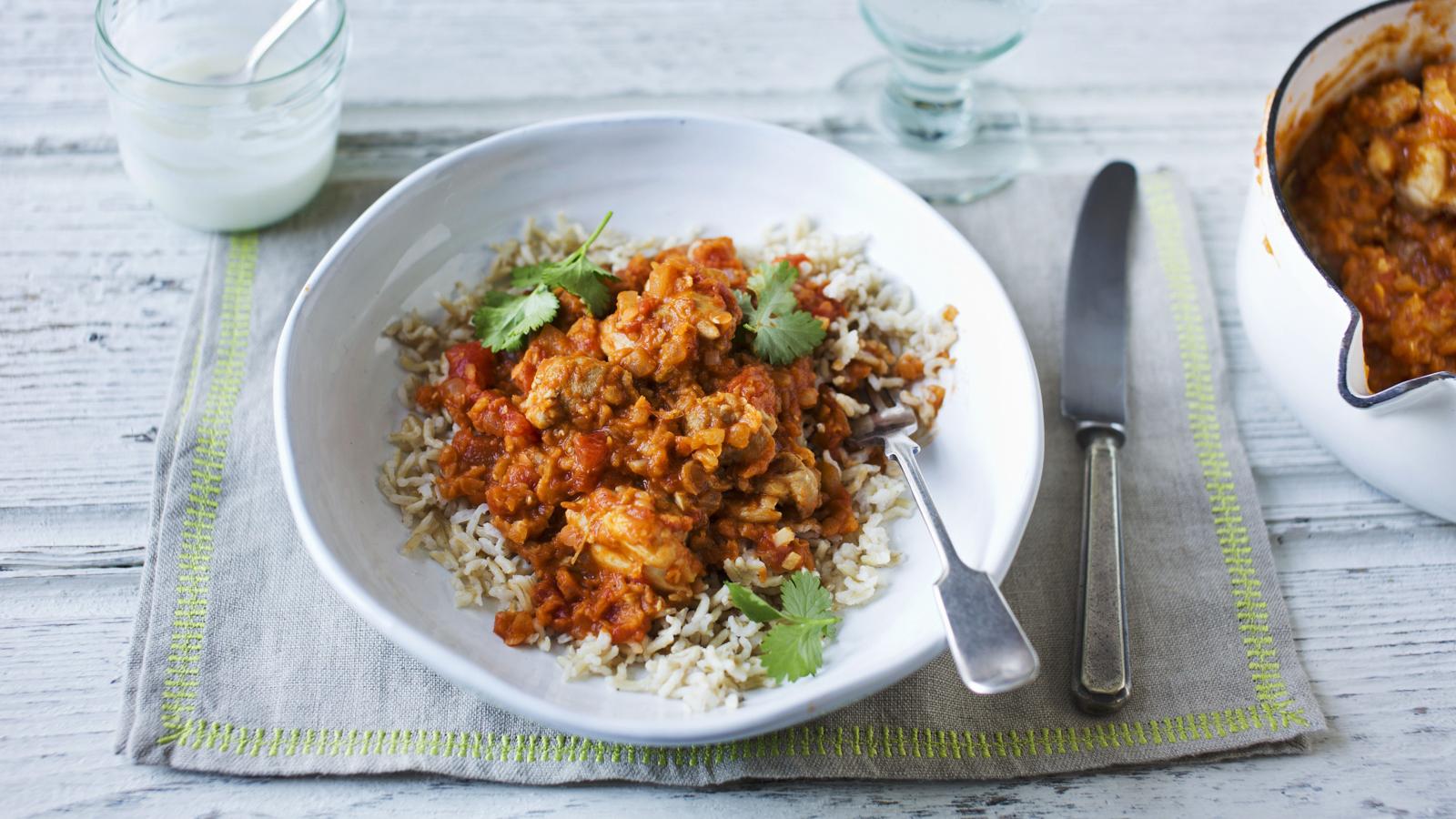
Chicken dhansak is a rich, hearty, and protein-dense dish inspired by the traditional Parsi dhansak, which combines lentils, vegetables, and spices into a thick, flavorful curry. This version uses chicken as the primary protein, simmered slowly with cooked lentils and aromatic spices to create a balanced dish that is both nourishing and deeply satisfying. Chicken dhansak is typically served with steamed rice or caramelized brown rice, making it a complete meal.
Ingredients
For the Lentil Base
- Toor dal (split pigeon peas) – ½ cup
- Masoor dal (red lentils) – ¼ cup
- Moong dal (yellow split lentils) – ¼ cup
- Water – as required for cooking
Vegetables (Traditional Dhansak Mix)
- Pumpkin or butternut squash – 1 cup, cubed
- Potato – 1 medium, cubed
- Carrot – 1 medium, chopped
- Brinjal (eggplant) – ½ cup, chopped
- Fresh fenugreek leaves or spinach – ½ cup, chopped
For the Chicken
- Chicken – 700 grams, bone-in or boneless, cut into medium pieces
- Turmeric powder – ½ teaspoon
- Salt – to taste
Aromatics and Spices
- Cooking oil or ghee – 3 tablespoons
- Onion – 2 large, finely sliced
- Garlic paste – 1 tablespoon
- Ginger paste – 1 tablespoon
- Green chilies – 2, finely chopped (adjust to taste)
- Cumin seeds – 1 teaspoon
- Dhansak masala – 2 tablespoons
- Red chili powder – 1 teaspoon
- Coriander powder – 1 teaspoon
Tangy and Sweet Elements
- Tamarind pulp – 2 tablespoons
- Jaggery or brown sugar – 1 tablespoon (adjust to taste)
For Garnish
- Fresh coriander leaves – chopped
Equipment Needed
- Pressure cooker or large heavy-bottomed pot
- Large pan for masala
- Blender or immersion blender
- Wooden spoon or spatula
Preparation Method
Step 1: Cook the Lentils and Vegetables
- Wash all the lentils thoroughly until the water runs clear.
- In a pressure cooker or pot, add the lentils, pumpkin, potato, carrot, brinjal, and fenugreek or spinach.
- Add enough water to cover everything completely.
- Cook under pressure for 4–5 whistles or simmer until the lentils and vegetables are very soft.
- Allow the pressure to release naturally, then blend the mixture into a thick, smooth puree. Set aside.
Step 2: Prepare the Chicken
- Wash the chicken and pat dry.
- Rub turmeric powder and salt evenly over the chicken pieces.
- Set aside while preparing the masala.
Step 3: Prepare the Dhansak Masala Base
- Heat oil or ghee in a large pan over medium heat.
- Add cumin seeds and allow them to splutter.
- Add sliced onions and cook slowly, stirring often, until they turn deep golden brown. This step is crucial for authentic flavor.
- Add ginger paste, garlic paste, and green chilies.
- Sauté for 2–3 minutes until the raw smell disappears.
- Add red chili powder, coriander powder, and dhansak masala.
- Cook the spices for 1–2 minutes, stirring continuously to prevent burning.
Step 4: Cook the Chicken
- Add the seasoned chicken pieces to the masala.
- Cook on medium heat for 5–7 minutes, stirring occasionally, until the chicken is lightly browned and coated in the spices.
- Add a splash of water if the masala starts sticking to the pan.
Step 5: Combine Lentil Base and Chicken
- Pour the blended lentil and vegetable mixture into the pan with the chicken.
- Mix well to combine everything evenly.
- Add salt as needed, keeping in mind the seasoning already added earlier.
- Simmer on low heat for 20–25 minutes, stirring occasionally, until the chicken is fully cooked and the curry thickens.
Step 6: Balance the Flavors
- Add tamarind pulp for tanginess and jaggery or brown sugar for sweetness.
- Stir well and simmer for another 5–7 minutes.
- Taste and adjust salt, sweetness, and sourness to achieve the characteristic dhansak balance.
Final Garnish and Serving
- Turn off the heat and garnish with fresh coriander leaves.
- Let the dhansak rest for 10 minutes before serving to allow flavors to develop fully.
- Serve hot with steamed basmati rice or caramelized brown rice.
- Traditionally, dhansak is accompanied by kachumber salad and fried onions.
Tips and Variations
- Using bone-in chicken adds deeper flavor to the curry.
- The consistency of dhansak should be thick but pourable; adjust with water if needed.
- Dhansak masala can be homemade or store-bought, but fresh masala gives the best aroma.
- The sweet and sour balance is essential; adjust gradually to avoid overpowering flavors.
- This dish tastes even better the next day as the flavors mature.
Nutritional Highlights
- High in protein from chicken and lentils
- Rich in dietary fiber from mixed dals and vegetables